
The importance of lotteries for Olympic sports.
The Pan American Games in Lima, Peru, which ended this Sunday, secured a record number of medals for the Brazilian delegation with 55 gold, 45 silver, and 71 bronze medals, second only to the United States, repeating what happened in 1963 at the Pan American Games in São Paulo.
With less than a year to go before the Tokyo 2020 Olympics, which will begin on July 24, 2020, the Brazilian Olympic Committee (COB) has not released a medal target.
The main financial driver of Brazilian Olympic sports is the funding from federal lotteries through the Piva Law. This year, the committee's projected revenue, which distributes part of the money to the federations, reaches R$ 250 million.
The Senate is also debating lottery funds.
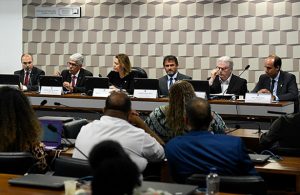
In addition to the public hearing held by the Sports Committee of the Chamber of Deputies, the Permanent Subcommittee on Sport, Physical Education and Training of Basic Categories of the Federal Senate also met this Wednesday (14) to discuss in a public hearing the new guidelines for national sport through the National Sports Plan.
At the opening of the hearing, Senator Leila Barros (PSB-DF), president of the subcommittee, stated that Brazil's record number of medals at the Pan American Games is a result of public policies supporting sports.
During the meeting, the Director-General of the Brazilian Olympic Committee (COB), Rogério Sampaio, described the Athlete Grant program (Law 10.891 of 2004) as fundamental to achieving positive results, and stated that the COB will examine the text of the National Sports Plan to provide its contributions. He also lamented the restrictions—attributed by him to the International Olympic Committee—on the COB's search for sponsorships. He acknowledged that financing through lotteries is essential for the execution of Olympic projects.
Payout reduction
Members of Congress and the Senate frequently use lottery revenue as a source of income for new social projects, jeopardizing the lottery's prize distribution plans.
Despite SECAP's efforts to unify lottery legislation through Law No. 13.756 and advocate for improved payouts for federal lotteries, parliamentarians will continue to 'nibble' at the prize percentages of lotteries operated by Caixa.
In addition to the cannibalization of payouts, there is a lack of courage on the part of parliament to create a regulatory framework for gambling in Brazil and to use part of these resources for national sports.
For the record.

