
Anitta calls for an end to betting, but lends her voice to "riscadinha" and "Raspe & Ganhe" (scratch and win games).
In Brazil, luck seems to have double standards. When it comes from betting, it's the villain. When it's packaged in a retail campaign, it becomes "light and fun" entertainment. Singer Anitta is the most recent example of this contradiction.
In June 2026, the artist recorded a video for the "Block no Tigrinho" campaign, a movement by 342 Artes, founded by Paula Lavigne, which brought together names like Caetano Veloso, Gilberto Gil, and Chico Buarque against gambling. According to Veja magazine, Anitta stated that gambling houses financially destroy the poorest families and supported projects that treat the sector as a public health issue.
That same month, on his way to the opening of the World Cup in the United States, he also took a jab at the sector in a video recorded on a private jet: "I'm having a blast, all this without a little tiger." The internet interpreted the phrase as a dig at Virginia Fonseca.
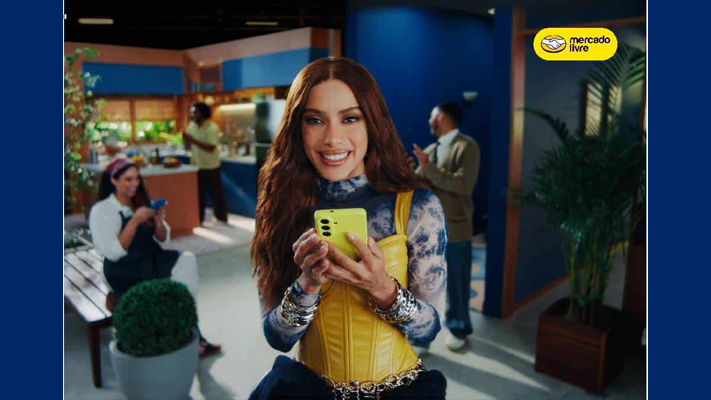
Now, he appears as the protagonist of Mercado Livre's Black Friday campaign, with the hit "Dá uma Riscadinha," a parody of his song "Paradinha."
The little scratch that resembles a scratch-off lottery ticket.
The official concept is to invite the consumer to "cross off" their wish list. But it's hard not to hear in the expression an echo of the old scratch-off lottery ticket, a product based exclusively on luck. The sound, the gesture, and the appeal of a quick prize are there, only now with the stamp of an artist who has publicly positioned herself against online gambling.
The problem isn't the jingle itself. The problem is consistency. Those who call for the end of a regulated sector, which pays taxes, has advertising rules and responsible gaming mechanisms, should exercise the same care before associating their image with mechanics that also depend on luck.
The same group's "Scratch & Win" game.
If the allusion to the scratch-off line could still be interpreted as a coincidence, the Mercado Libre Group itself is clearing up any doubt. Mercado Pago has launched the second phase of the "Tá na Cara" campaign with the "Scratch & Win" promotion, valid from November 12th to December 25th.
In practice, the mechanics work like this:
Purchases of R$ 50 or more on Mercado Livre, paid with Mercado Pago card, Mercado Parcelado, account balance or Cofrinho, entitle you to a scratch card;
⇒ The prizes include a Meli+ subscription, discount coupons, and access to a CDB (Certificate of Deposit) with a 140% return;
⇒ There are also lucky numbers available to enter a draw for a year's worth of purchases on Mercado Livre, valued at R$ 12.
In other words, it's a scratch-off lottery with instant prizes and a draw, used as a tool to stimulate consumption and, incidentally, the use of credit and financial products from the group. Nothing very different, in essence, from the logic that critics of betting claim to combat.
A history of double standards.
The contradiction didn't begin on Black Friday. In May, as BNLData reported , Anitta argued that gambling advertising should be banned like cigarette advertising, saying that betting was "ruining the country's economy."
The comparison to cigarettes is noteworthy coming from someone who is the Head of Creativity and Innovation at Beats, an Ambev brand, and who participated in the development of mixed alcoholic beverages, such as Beats 150 BPM, with 13,9% alcohol content. In the same interview, she admitted to having performed a show sponsored by a betting company.
There is also an earlier episode. On September 9, 2024, according to messages from Daniel Vorcaro's cell phone intercepted by the Federal Police, the former controller of Banco Master organized a meeting at his home in the United States between the singer, her brother and partner Renan Machado, and four businessmen from the sports betting sector. This information was revealed by Paulo Cappelli's column in Metrópoles.
The messages don't specify what the "betting deal" being discussed was. The artist's representatives stated that she always participates in negotiations with brands and that the contract with Will Bank did not go through. There is no indication that Anitta is being investigated in the Master case.
This episode doesn't make her guilty of anything. It only shows that, before asking for the ban on betting, she had already sat down to listen to proposals from the sector.
Selective luck
The campaign cites the 2026 Consumer Outlook, according to which 86% of users say they already have money saved to spend. The incentive is clear: spend, pay in installments, scratch, and hope for the best. When this same combination of impulse and expectation of gain appears in an authorized betting site, it is treated as a threat to the financial health of families.
This isn't about condemning Mercado Pago's promotion or the singer's partnership with a major brand. Commercial promotions with raffles are legal and have been part of retail for decades. The point is different: luck doesn't change its nature depending on who sells it. If it's acceptable for e-commerce, it deserves at least an honest debate when it comes to the regulated betting market.
As I often say, the game is either legal or illegal, but not playing is impossible. Anitta just proved that, chorus and all.

