
CBF, COB and CPB are taking the bill for the ban on betting in Brazilian sports to the STF (Supreme Federal Court).
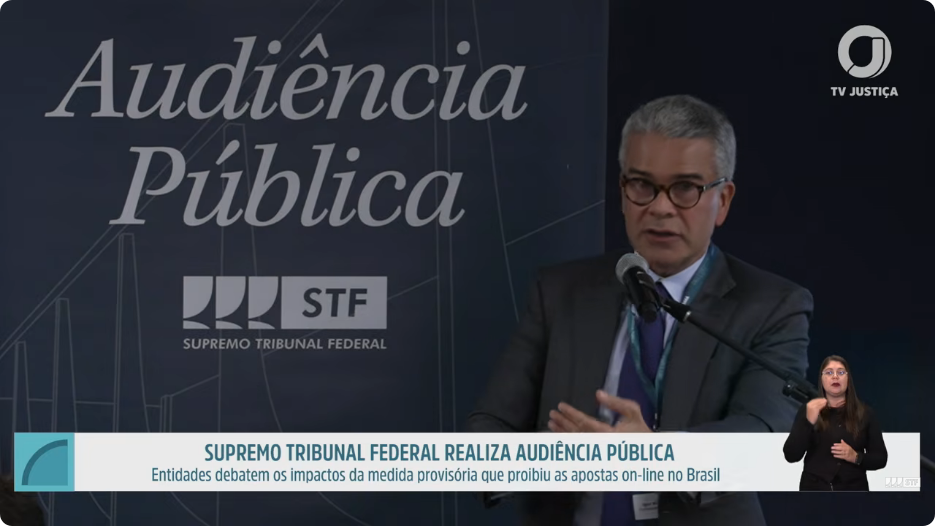
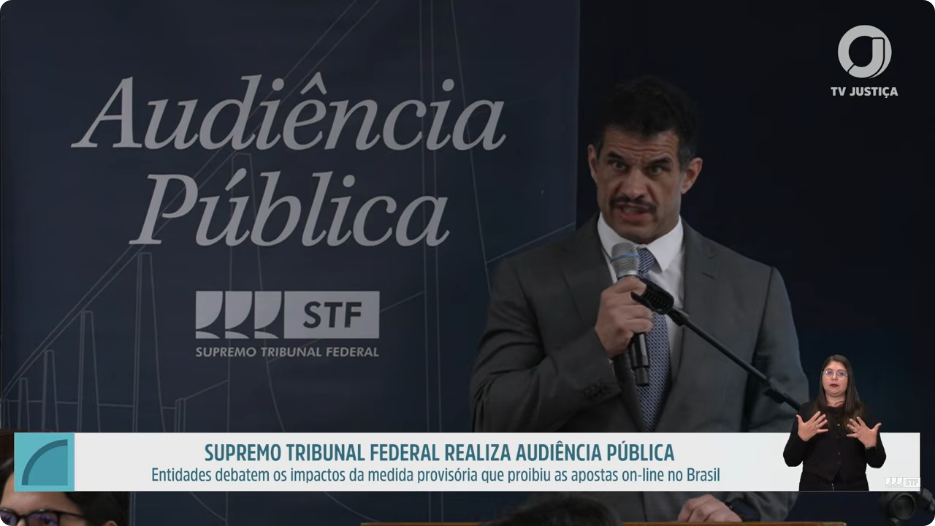
Brazilian sports went to the Supreme Federal Court (STF) to present the bill for Provisional Measure No. 1.394/2026, which prohibited fixed-odds betting in the country. At the public hearing convened by Minister Luiz Fux this Tuesday (3), within the scope of ADI 8027, three entities showed with numbers the size of the hole caused by the abrupt exit of bets: the Brazilian Football Confederation (CBF), the Brazilian Olympic Committee (COB) and the Brazilian Paralympic Committee (CPB). The three asked, in different ways, for a solution that preserves legal security and avoids the financial collapse of the sports sector.
CBF: "a real debacle in the system"
Lawyer Igor Mauler Santiago, representing the CBF (Brazilian Football Confederation), opened the presentation by quoting Eduardo Galeano, who said that football is the most important of unimportant things. He then presented the figures for this "supposed unimportance." According to the organization, Brazilian football generated R$ 91 billion in 2025, almost 1% of the GDP. In the same year, it generated R$ 22 billion in income, R$ 12 billion in taxes, and approximately 630 jobs.
The confederation sustains itself with three profitable products: the men's national team, the Copa do Brasil, and, to a lesser extent, the naming rights of the Brasileirão Série A. With this revenue, it funds 26 loss-making competitions, such as the lower leagues, regional cups, women's football, and youth categories. In 2026, the CBF expanded the calendar from 2.800 to 3.300 matches and from 24 to 28 competitions. It also began investing in the professionalization of refereeing and financial fair play. This represents an additional R$ 192 million in investments this year.
“The regulation of betting has brought a substantial increase in football revenue, that’s undeniable,” Santiago stated. As an example, he cited Fluminense. The club’s last main sponsorship deal that wasn’t with a betting company yielded R$10 million per year, approximately R$15 million in current values. Today, the contract with a betting company is worth R$53 million annually until 2029.
According to the CBF (Brazilian Football Confederation), the Provisional Measure caught the confederation and the federations in the midst of renegotiating the 2027-2030 sponsorship cycle. The CBF's revenue loss in 2027 will be R$ 420 million, and this number will grow in subsequent years. Of the 40 clubs in the A and B series, 27 have Bet as their main sponsor. These contracts total approximately R$ 1 billion per year, 35% of all club sponsorship, and were projected to reach R$ 5,4 billion by 2030.
The impact also affects broadcasting rights and advertising space on the field, which increased in value after the entry of betting companies. “The abrupt exit of betting companies creates a real debacle in the system,” said Santiago. With so many properties vacant at the same time, the oversupply drives down prices. The only way out for clubs will be to sell players because, according to article 86 of the General Sports Law, whoever releases an athlete must pay their salaries until the end of their contract. “There will be an oversupply and a devaluation. The effect is cumulative, a negative snowball effect for the entire Brazilian football ecosystem.”
Santiago proposed two solutions on behalf of the CBF (Brazilian Football Confederation). The first would be to prohibit online casinos and maintain sports betting with significant restrictions. The second would be a complete ban, but with a transitional rule until the 2030 World Cup cycle. He cited the example of the Premier League, which only vetoed the main sponsorship, maintained other forms of sponsorship, and gave three seasons for adaptation. "Here, as already mentioned, it was 10 days," he compared.

COB: R$ 2,6 billion less for sports
Speaking on behalf of the Brazilian Olympic Committee (COB), lawyer Pedro Henrique Rebelo de Mendonça emphasized that sport is much broader than just football. He also stated that the organization was not there to pass judgment on fixed-odds betting, but rather to demonstrate to the Supreme Federal Court (STF) the immediate impact of the measure on the national sports system.
Mendonça pointed out that the COB maintains continuous activities throughout the entire Olympic cycle. In 2026, the organization sent delegations to the Winter Games and the South American Games, and another was at the Youth Olympic Games in Dakar at the time of the hearing. The committee also maintains the Time Brazil Training Center in Rio and organizes the Youth Games, which brought together around 5 athletes in Foz do Iguaçu. “Sports planning is not done in the short term. It requires continuous investment,” he said.
The Brazilian Olympic Committee (COB) is one of the legal beneficiaries of the funds transferred by the operators. For 2027, the forecast was around R$ 130 million, equivalent to 20% of the planned budget. The cut affects the 38 Olympic confederations in two ways. The first is indirect, because they receive decentralized resources from the COB. The second is direct, because the law provided for transfers to the confederations themselves and to the athletes whose names, brands, and images were used in the bets.
Article 29-A of the General Sports Law provides for six sports subsystems, led by the COB (Brazilian Olympic Committee), the CPB (Brazilian Paralympic Committee), the Brazilian Club Committee, the Brazilian Paralympic Club Committee, the Brazilian Confederation of School Sports, and the Brazilian Confederation of University Sports. Combined, these six entities will cease to receive approximately R$ 325 million in 2027. Including other legal beneficiaries of sports, such as the Ministry of Sports itself, the impact reaches R$ 2,6 billion between the end of 2026 and 2027. The COB concluded by requesting stability and legal security for the development of sports "from training to high performance."
CPB: regulation is the way forward.
Speaking for the Brazilian Paralympic Committee (CPB), Mizael Conrado was the most emphatic in defending regulation. He stated that if prohibition were the best solution for society, the committee would support it, because the commitment to the 215 million Brazilians comes before Paralympic policy. But he said he was convinced that only regulation reduces the harmful effects of gambling.
Conrado cited international examples. Germany limits the value of bets. The Netherlands limits the amounts according to the bettor's age and requires the operator to show the client their history of wins and losses on the platform. Sweden holds operators responsible for diagnosing and preventing compulsive betting and has already fined companies that have violated the rule.
He also drew attention to the mixing of topics in the debate. According to him, both Fux and the Minister of Health, Alexandre Padilha, spoke about gambling and online casinos, but no one pointed to such severe harm in sports betting. "One thing is a bet on the outcome of a football match, which exists all over the world, and that is subject to regulation. Another thing is a bet that lasts three seconds."
The official expressed skepticism about blocking the illegal market. He pointed out that the illegal lottery game "jogo do bicho" never ceased to exist, that a VPN is all it takes to access any website, and that Anatel (the Brazilian telecommunications regulatory agency) can't even block spam calls. He also stated that the Provisional Measure does not meet the urgency requirements because nothing changed between the granting of the licenses and the prohibition. In his assessment, the cases already pending before the Supreme Federal Court (STF) would be sufficient to guide Congress.
Conrado differentiated the situation of the Brazilian Paralympic Committee (CPB) from that of the clubs. The committee does not receive sponsorship from betting companies: it receives legal transfers, just like public health and safety services. Since 2017, the CPB has grown from 60 to 1.300 employees and established 103 reference centers, serving more than 13 children. Last year's Paralympic Festival brought together 54.809 children in 123 cities. In high-performance sports, Brazil went from 37th place in Athens 1996 to 5th in Paris 2024. He cited swimmer Alessandra Oliveira, world champion with a record at age 17 in Singapore, as a result of policies such as the Athlete Grant program and transfers from lotteries and, until September, from betting companies.
Convergence through modulation
The three entities arrived at the Supreme Court with one point in common: it is not enough to prohibit without considering who depends on these resources. CBF and CPB advocated separating sports betting from online casinos, and the CBF requested a transition period until 2030. However, the modulation argument faces resistance in the regulated sector. A significant portion of revenue comes from online gambling, and a partial ban tends to push these bettors into the illegal market.

