Governor of Rio de Janeiro vetoes transfer of unclaimed lottery prizes to the Paralympic Committee.
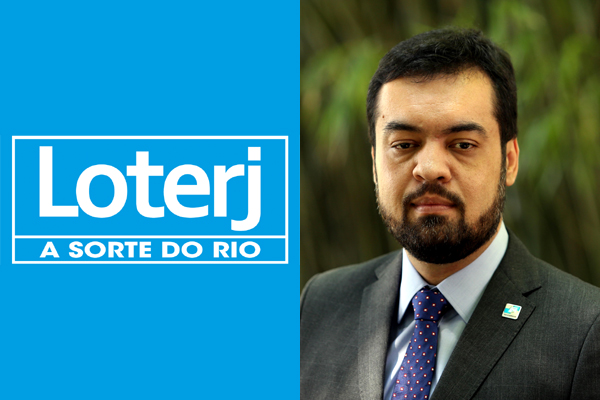
Amidst the Tokyo Paralympic Games, the governor of Rio de Janeiro, Cláudio Castro (PL), vetoed the project that would have allocated unclaimed prizes from the Rio de Janeiro State Lottery (Loterj) to the Brazilian Paralympic Committee (CPB). A portion of the funds would also have gone to the Rio de Janeiro Social Welfare Fund, Rioprevidência.
The veto was published this Thursday (2), in the Official Gazette of the Executive Branch. In the justification for the proposal, which had among its authors the four-time world champion Bebeto (Podemos), the then state deputy Flávio Bolsonaro (Patriota) and the current state Secretary of the Environment, Thiago Pampolha (PDT), Castro argues that the matter is the exclusive competence of the Executive Branch.
The governor further argued that Loterj is an autonomous agency with financial independence and depends on revenue from ticket sales, budgetary resources, and other sources. In his veto, Castro stated that he had consulted the agency, which responded that the measure would cause operational losses.
“By removing the possibility of reinvesting unclaimed prizes in future games, the measure would create a real stagnation in the games, suppressing the main mechanism capable of increasing sales and attracting new bettors (…) the offering of attractive prizes to the public, resulting in a decrease in revenue (…) to be invested in social, educational, sports programs, etc.”, says the official document.
The main source of funding for Brazilian Paralympic sport is the Agnelo/Piva Law, based on revenue from the Caixa Econômica Federal (CEF) lotteries, implemented in 2001. The sport receives 2,7% of the total amount collected from bets. Of this amount, regardless of the value, Paralympic sport receives 37,04%. The remaining 62,96% is allocated to Olympic sport.
Until 2015, before the approval of the Brazilian Inclusion Law, considered the statute for people with disabilities, the amount allocated by lotteries to finance sports was 2% of the revenue, divided into 85% for Olympic sports and 15% for Paralympic sports.
Contacted for comment, the CPB has not yet responded to the veto. ( Stéfano Salles from CNN in Rio de Janeiro )
Reasons for the total veto by the Governor of the State of Rio de Janeiro, Claudio Castro, of Bill No. 374/2015:
REASONS FOR TOTAL VETO OF BILL NO. 374/2015, AUTHORED BY REPRESENTATIVES BEBETO, DICA, FLAVIO BOLSONARO, GERALDO PUDIM, PAULO RAMOS, PEDRO FERNANDES, TANIA RODRIGUES AND THIAGO PAMPOLHA, WHICH “PROVIDES FOR UNCLAIMED LOTERJ PRIZES IN THE MANNER MENTIONED.”
Although the concern expressed in the parliamentary initiative is noble, I was unable to approve it.
The proposal under consideration aims to stipulate that prizes from the Rio de Janeiro State Lottery – LOTERJ, not claimed by the winners, be transferred to the Brazilian Paralympic Committee (CPB) to sponsor high-performance athletes in sports recognized by the International Paralympic Committee, and to the Unified Social Security Fund of the State of Rio de Janeiro – RIOPREVIDÊNCIA.
However, by attempting to stipulate how part of LOTERJ's revenues will be used, the Bill interferes with the powers of the Executive Branch, violating the Principle of Separation of Powers, provided for in Articles 2 of the Federal Constitution and 7 of the Constitution of the State of Rio de Janeiro.
Furthermore, Article 61, § 1°, II, “b” of the Federal Constitution and Article 112, § 1º, II, “d”, of the Constitution of the State of Rio de Janeiro expressly grant the Head of the Executive Branch the exclusive power to present bills concerning budgetary matters.
But that's not all. LOTERJ is an autonomous entity with financial autonomy, primarily ensured by revenue from ticket sales and secondarily by budgetary allocations or subsidies included in the State Budget; in addition to legacies, donations, and resources from other sources. Regarding the net profits earned by LOTERJ in each fiscal year, the current wording of Article 14 of Decree-Law No. 138, of June 23, 1975, stipulates that "they shall be applied, in the subsequent fiscal year, for the purpose of hospital assistance."
and school-related, of social, educational, sporting and cultural interest, according to specifications to be established annually by an act of the Executive Branch.”
Thus, when asked to comment on the matter, the Authority informed that the approval of the project will cause serious operational damage to LOTERJ. This is because, by removing the possibility of reinvesting unclaimed prizes in future games, the measure would create a real stagnation in the games, suppressing the main mechanism capable of increasing sales and attracting new bettors, namely, the offering of attractive prizes to the public, resulting in a decrease in the revenue to be collected by the Authority and, consequently, to be invested in social, educational, sports programs, etc.
Indeed, the original objective of LOTERJ is to operate and control the lottery service within the State of Rio de Janeiro in order to generate resources to be applied to programs and projects of social interest, related to public safety, education, culture and sports, social security, with an emphasis on health and hospital care.
He further emphasized that the application of LOTERJ's profits has always occurred within the territory of Rio de Janeiro. Therefore, any potential investment in the Brazilian Paralympic Committee would use these resources beyond the borders of our state, to the detriment of various other institutions and bodies in the state of Rio de Janeiro.
Finally, it is essential to highlight that a similar matter was declared unconstitutional by the Court of Justice of the State of Rio de Janeiro in Direct Action of Unconstitutionality No. 002002102.2017.8.19.0000, the summary of which is reproduced below:
"SUMMARY: DIRECT ACTION OF UNCONSTITUTIONALITY. STATE LAW, OF PARLIAMENTARY INITIATIVE, WHICH DETERMINED THAT LOTERJ TRANSFER, TO RIOPREVIDÊNCIA, FROM ITS BUDGETARY ALLOCATION, THE RESOURCES NECESSARY FOR THE PAYMENT OF ITS PAYROLL OF RETIRED AND PENSIONED EMPLOYEES. FORMAL AND MATERIAL DEFECTS. ACCEPTANCE OF THE REQUEST. Modification given to art. 112, § 1, item II, letter “d”, of the State Constitution, by Constitutional Amendment No. 53/2012, which does not remove the exclusive initiative of the Head of the Executive Branch to deal with the structure of the respective Power. Norm that, although modified in its original wording, must be interpreted in line with the principle of separation of powers, enshrined in art. 7, caput, of the CERJ." It is a settled manifestation of the aforementioned principle that, although the term "structuring" is no longer expressly stated in the constitutional text, one branch of government cannot take the initiative to legislate on the internal organization of another branch's administration. The violation of Article 112, § 1, item II, letter "b" of the State Constitution is also undeniable. RIOPREVIDÊNCIA is the autonomous agency responsible for managing, at the state level, the State's Own Social Security Regime (RPPS) for local statutory employees. It is therefore necessary to conclude that the impugned legislation improperly interferes in the realm of legal provisions concerning state public servants and their retirement and pension system. Violation of the principle of solidarity. Indeed, it violates not only the principle of solidarity, but, above all, the principle of equality, to require that only LOTERJ collect, from its budgetary allocation, the amounts necessary for the payment of the payroll for RIOPREVIDÊNCIA. "This rule does not apply to inactive and retired individuals formerly linked to that autonomous entity, but it does not apply to all other autonomous entities and bodies of the direct administration. This rule is declared unconstitutional."
For all the reasons stated above, I had no choice but to impose a total veto on the Bill now submitted to this Honorable Parliamentary House for deliberation.
CLAUDIO CASTRO
Governor