Legitimuz reveals the profile of 25 million Brazilian bettors in an unprecedented white paper.
Legitimuz released a white paper with data from 25 million unique verified CPF numbers (Brazilian taxpayer IDs). The document presents information on the age, income, gender, and digital behavior of Brazilian bettors. The release took place during Legitimuz Day 2026, held in São Paulo this Monday (May 18).
Kayky Janiszewski, founder and CEO of the company, led the presentation for national and international regulators, operators, and experts. The platform holds approximately 72% of the identity verification market for betting in the country. The company has served more than 135 regulated websites with the .bet.br extension since January 1, 2025.
The executive emphasized that the survey is based on concrete information from verified users. "This isn't a survey, it's not a hypothesis. These are real data," stated Janiszewski. The CEO highlighted that the information presented contrasts with narratives frequently disseminated by the press about the profile of gamblers in Brazil.
“The media spreads a lot of misinformation about age, income, and gender. Our goal is to enrich the debate with verified information,” the executive stated. The white paper was developed to provide the market with a data-driven perspective on who is actually investing in the country.
The age range of gamblers contradicts common perception.
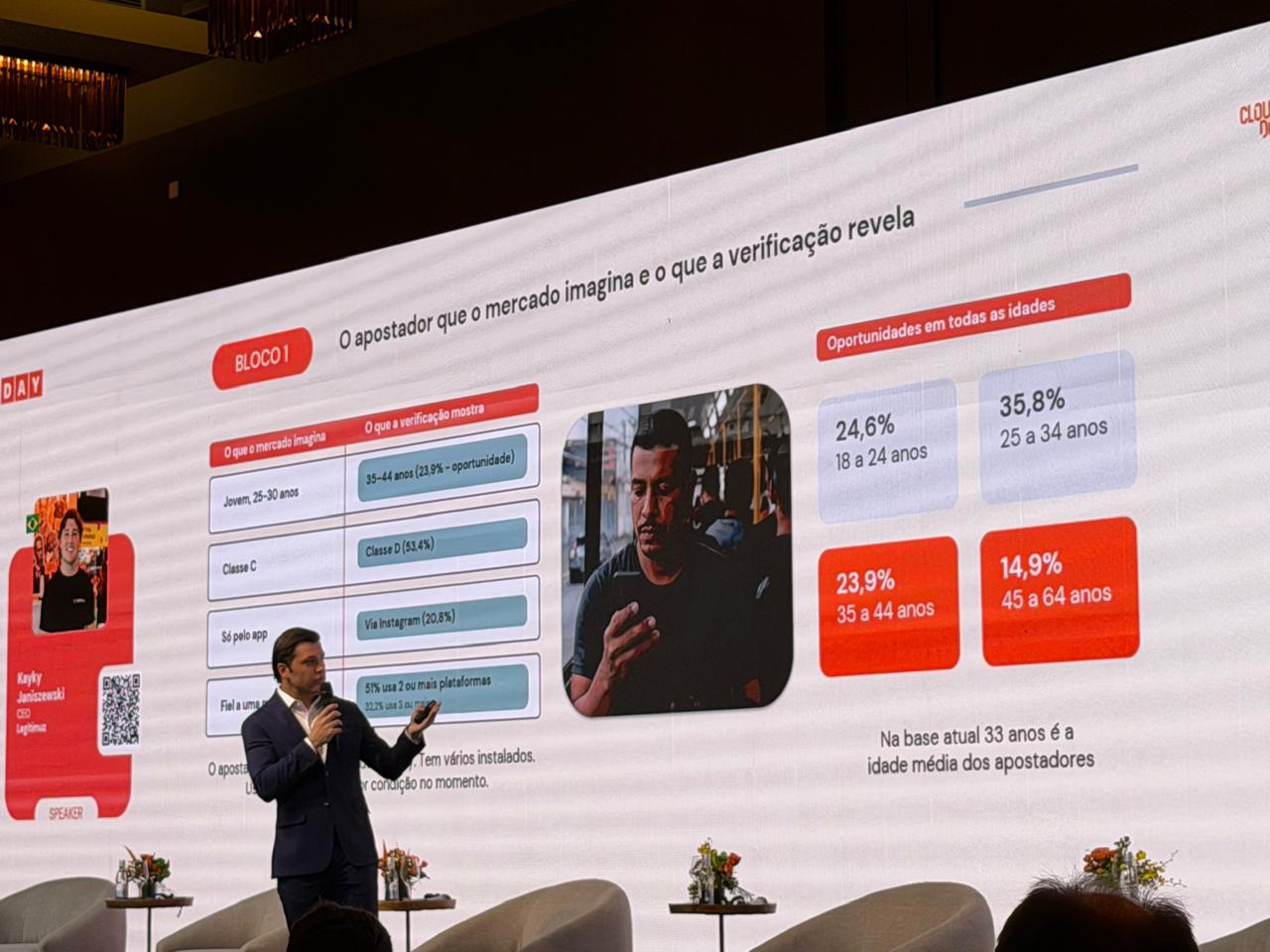
Data collected by Legitimuz shows that users between 18 and 24 years old represent 24,6% of the verified user base. The 25 to 34 age group appears to have the highest proportion among registered bettors on the platform, at 35,8%. The analysis also identified a significant presence of users between 35 and 44 years old, at 23,9%.
Bettors aged 45 to 64 also make up part of the user base and represent 14,9%. The CEO identified a specific business opportunity in the middle-aged audience. "The opportunity lies in the 35 to 44 age group, which is underexploited by operators," said Janiszewski.
The numbers contradict the perception that the market is exclusively dominated by very young users or teenagers. The age distribution reveals a more diverse audience than portrayed in reports about the sector. During the event, Janiszewski reinforced that the data disproves the narrative that the sector is dominated by minors, highlighting that rigorous identity verification has been effective in blocking access attempts by users below the legal age.
Average income and socioeconomic profile of users
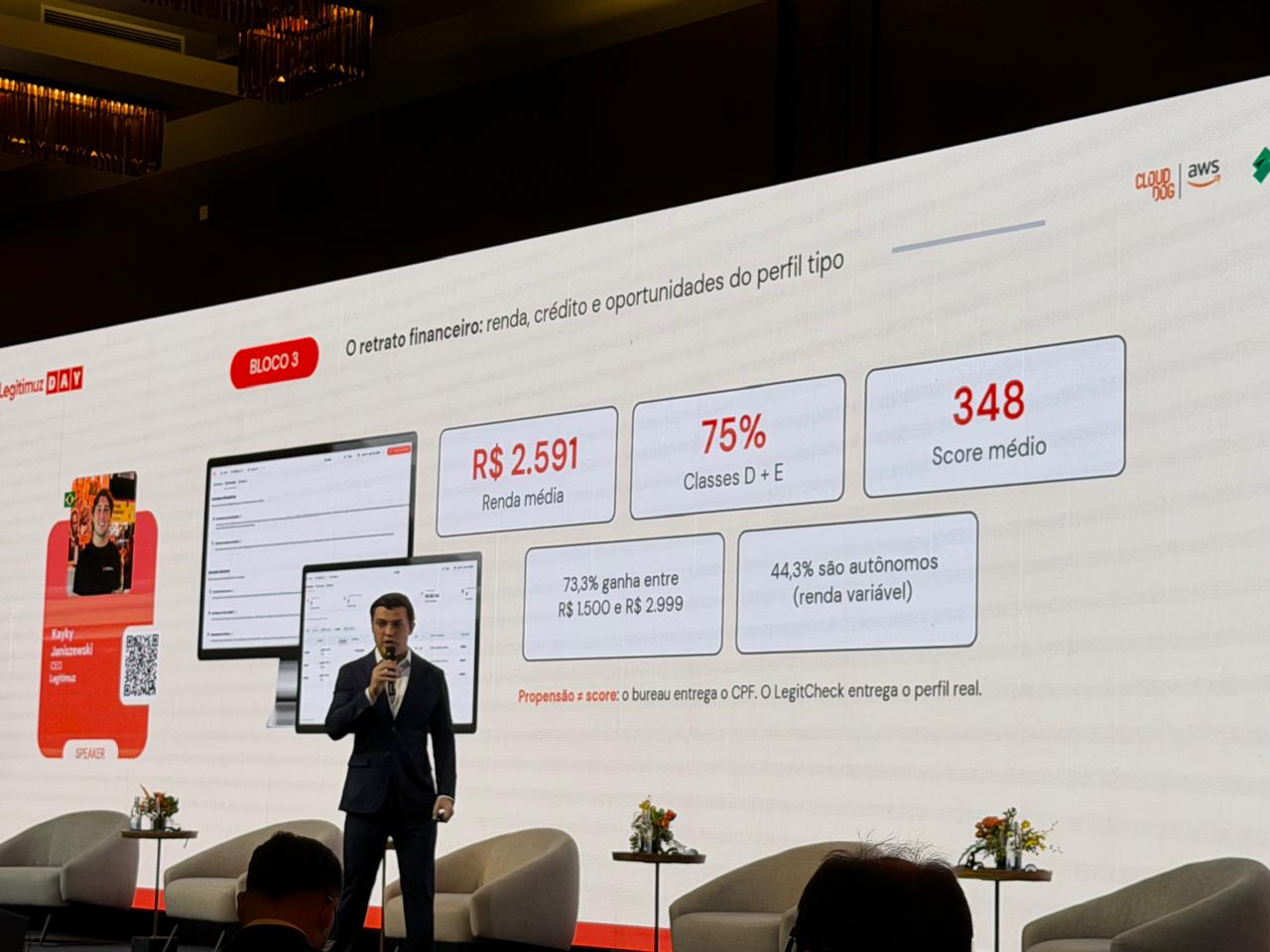
The white paper indicates that the average presumed income of bettors registered on the platform is R$ 2.500. The analysis of distribution by social class shows that 75% of users belong to classes D and E. Of the total verified bettors, 73% have an income between R$ 1.500 and R$ 3.000.
The average credit score recorded is around 300 points. Janiszewski made an important distinction regarding the financial behavior of different profiles. “When you analyze the financial transactions of users who make high deposit amounts, the minority are in classes D and E. The majority of large depositors are in classes A and B. The idea that betting sites depend on D and E users to survive is not true. D and E generate more volume, but less GGR (gross gaming revenue) for the house,” explained the executive.
The consolidated analysis established two distinct profiles of bettors. The predominant profile has an average age of 33 years. Uses the Android system. Accesses mainly through Instagram. Belongs to social class D. Has an average income of R$ 2.500. Presents a credit score close to 300 points. Works as a freelancer. Demands a mobile-first experience.
A second profile presents greater revenue potential. It is characterized by formal employment, a credit score above 400 points, effective deposit capacity, and an active Guarantee Fund (FGTS) account.
Women represent more than a third of the base.
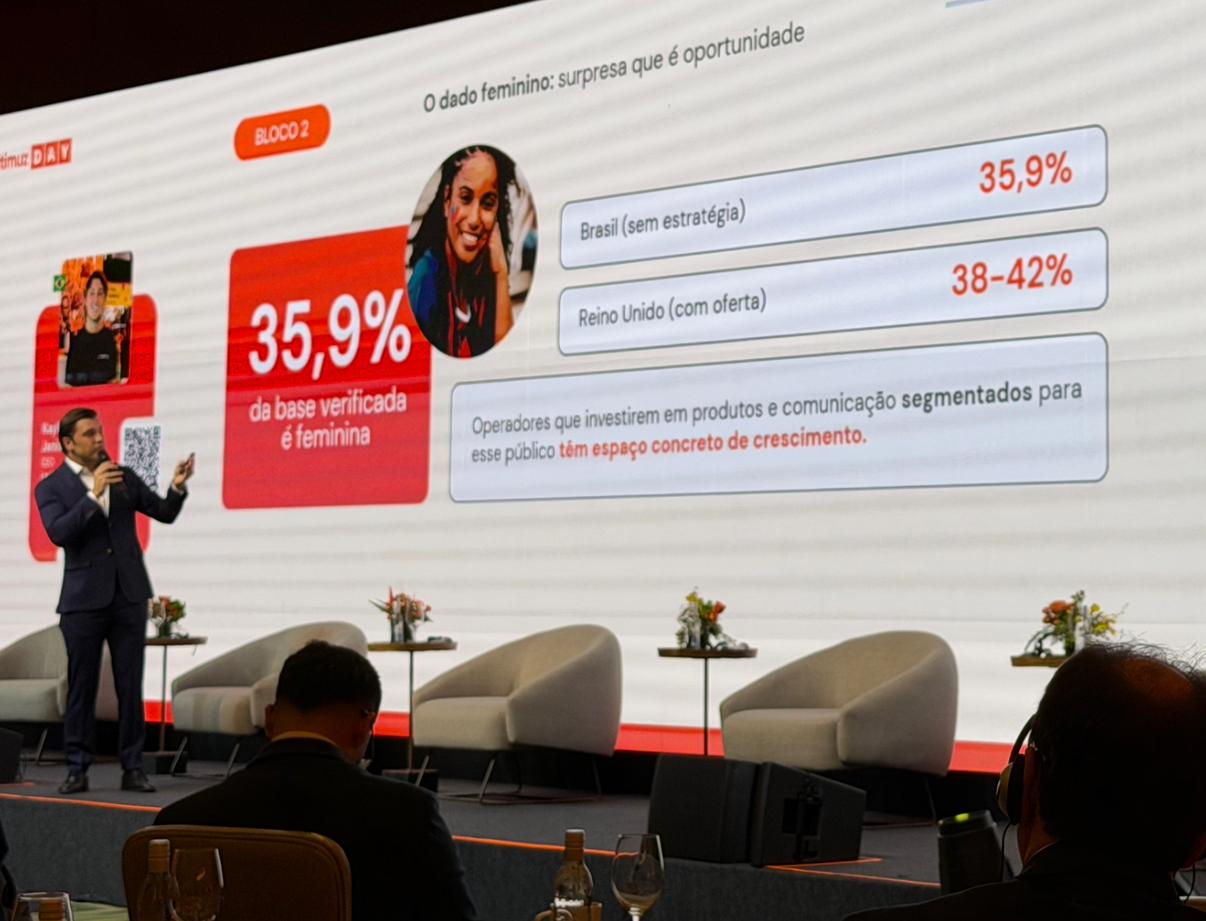
Women represent 35,9% of Legitimuz's verified user base. Janiszewski made a comparison with the British market to contextualize this percentage. The United Kingdom, considered one of the largest online betting markets globally, registers female participation between 38% and 42%.
The executive sees growth potential in this segment in Brazil. "There, the percentage of women is between 38% and 42%. Brazil can not only reach but surpass these numbers. It's a great insight for more targeted marketing campaigns ," stated the CEO of Legitimuz.
Multiple registrations indicate a search for promotions.
The survey identified that 51% of bettors are registered with two or more operators. Of the total users, 43% are registered with between 2 and 7 different platforms. A further 7,9% are registered with 8 or more betting sites.
Janiszewski interpreted these numbers as indicative of a search for promotions. "Then the challenge becomes retention: how to retain the bettor not through bonuses, but through product, relationship, and strategy," the CEO pondered. The executive highlighted that the multiplicity of registrations represents a challenge for operators to keep their users active.
Android dominates among devices used.
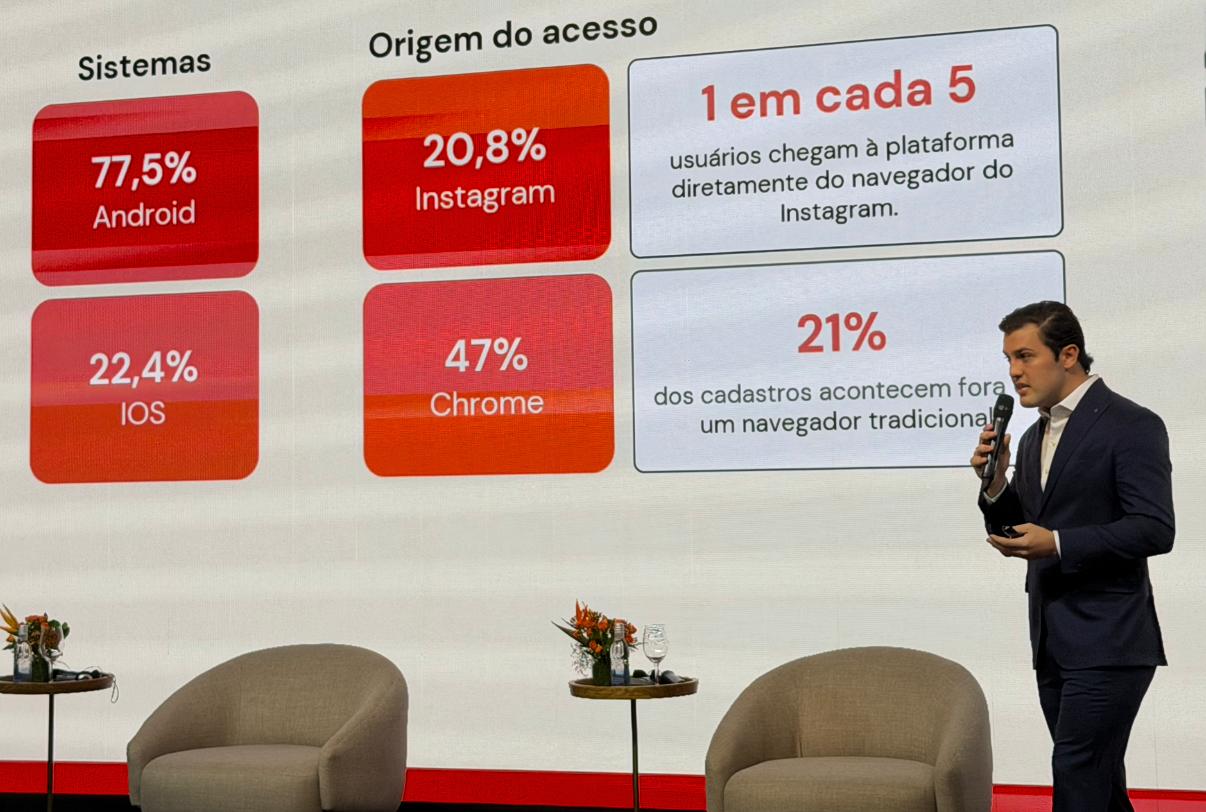
Device analysis shows that 77,5% of bettors use devices with the Android operating system. iOS users represent 22% of the verified user base. Among Android users, half operate operating versions of the system prior to 2023.
The data indicates the use of older devices. The CEO commented on the technical implications of this device profile. "This completely impacts the experience. Heavy workflows, with lots of graphics, don't provide a good experience for these users," stated Janiszewski.
The information suggests a need to adapt platforms to different processing capabilities. The predominance of Android devices with older versions of the operating system represents a technical challenge for operators to develop suitable interfaces . During the presentation, the CEO emphasized that operators who ignore this technological reality miss significant opportunities for conversion and engagement.
Instagram leads as a source of traffic for verification.
User traffic to verification processes exhibits specific characteristics regarding its origin. One-fifth of accesses to verification systems come from Instagram. The Chrome browser accounts for 47% of verification sessions.
Instagram's built-in browser has technical limitations regarding camera functions. These restrictions compromise verification processes. Instagram's predominance as an access channel has implications for the development of verification processes.
The limitations of the social network's integrated browser create technical obstacles that affect the registration conversion rate. Operators need to consider these characteristics when developing their identity verification flows.
Camera lock compromises conversion.
The presentation highlighted a recurring technical obstacle in identity verification processes. For every ten verification attempts, one encounters a denial of access to the device's camera. "For every 10 people who try to verify themselves, one is denied access to the camera. This kills the site 's conversion rate ," explained Janiszewski.
The company developed its own app, available in digital stores, to circumvent this barrier. The app already has camera permissions configured by default. The solution has reached 1,5 million downloads.
The system automatically identifies the last registration that attempted verification by IP address. It completes the process without the need to re-enter data. "It's easier to teach a bettor how to download an app than how to unlock the camera in their phone's settings," the executive summarized.
Identity documents predominate in the verification process.
The distribution of documents used for verification shows clear preferences among users. Identity documents, both physical and digital, represent 69,2% of submissions. The conversion rate reaches 84,8%. The National Driver's License accounts for 25,7% of the documents submitted.
The Digital Driver's License (3,6%) shows a slightly higher conversion rate than the Digital Identity Card (0,6%). Documents such as passports, professional licenses, and others represent a minority in submissions. “Brazil is one of the most advanced countries I have ever seen in digital identity. We validate digital driver's licenses and identity cards directly at Serpro, with excellent results,” stated Janiszewski.
Direct validation with the Serpro database allows for faster and more secure verification of digital documents. The advancement of digital identification in the country facilitates verification processes on betting platforms. The executive highlighted that integration with official government databases represents an important competitive advantage for the Brazilian market compared to other jurisdictions.
The nighttime period sees the highest volume of checks.
Operational data reveals specific temporal patterns for verification processes. The period between 6 PM and 18 PM concentrates the highest volume of verifications with 31,4%, broken down as follows: 22 PM - 5,9%, 18 PM - 6,4%, 19 PM - 6,6%, 20 PM - 6,5%, and 21 PM - 22%.
The platform currently processes 300 registrations daily. The average is 2,2 documents per verification process. The system records 1,5 million daily transactions, including accesses, withdrawals, password changes, and authentications.
The company projects doubling these volumes during the 2026 World Cup. The availability contract establishes a 99,99% uptime rate. The concentration of checks during the nighttime period reflects user access behavior to betting platforms.
Fraud prevention exceeds R$ 100 million.
The work in digital security shows quantifiable results in preventing fraudulent activities. "We estimate more than R$ 100 million in fraud prevented. Fraud escalates very quickly, especially in the early morning hours," stated Janiszewski.
The company announced an expansion of its technological capabilities to include responsible gambling tools. "By understanding the gambler's presumed income and financial transactions, we have everything we need to help operators in this area," stated the CEO.
Legitimuz intends to use users' financial profile data to develop tools that help operators implement responsible gaming practices. Fraud prevention is one of the platform's main areas of focus. During the event, the executive detailed that the company's artificial intelligence systems identify suspicious patterns in real time, allowing for preventative blocks before greater losses occur.
Data becomes available to partner operators.
Janiszewski concluded his presentation with an announcement directed at the betting operators present at the event. The CEO informed them that most of the information presented during the meeting is available for consultation by the platform's partners.
“80% of the data I showed today is available on our dashboard . You can see the average age of your database, the estimated income by state and city, and the types of documents submitted. It's easily accessible,” the executive stated. The information is made available through the Legitimuz control panel.
Partner operators can access aggregated data about the profiles of users registered on their platforms. This aggregated data is available exclusively to operators who use Legitimuz services.
The executive highlighted the company's objective in making this information available to the market. “We want to eliminate the misinformation circulating in the media about our sector, about who the bettor is. That's how we create a better, safer sector,” stated the CEO of Legitimuz. The event brought together representatives from regulatory bodies, national and international operators, as well as compliance and technology experts, solidifying its position as one of the main forums for discussion on the regulated betting market in Brazil.