
The betting sector is using SBC Digital Brazil Day to counter narratives and prepare for a hearing at the Supreme Federal Court.

On Wednesday (October 28th), SBC held an extraordinary edition of SBC Digital Brazil Day dedicated exclusively to the crisis in the regulated betting market, caused by the provisional measure issued by President Lula on September 25th. The free online event brought together 38 speakers in six panels. It started at 11 am and lasted until the late afternoon, with an average audience of about 100 simultaneous viewers on the SBC Notícias Brasil YouTube channel.
The "fact or fake" format served as the guiding thread. Moderated by journalists Leonardo, Isadora Marcante, and Elisa Marcante, the debaters attempted to dismantle recurring claims about the sector, speaking to those outside the industry. The event was supported by ANJL, Abrajogo, the Sport Integrity Global Alliance (SIGA), and BNLData. The organizers emphasized that the initiative had no political or partisan orientation.
One phrase resonated across several panels, quoted by different participants: the maxim of BNLData editor Magnho José, that "gambling is either legal or illegal, but not gambling is impossible."
The event was organized into six consecutive blocks and featured the participation of the following experts:
⇒ How did we get here ? An analysis of the events and decisions that shaped the Brazilian market, with Plínio Lemos Jorge (president of ANJL), Ana Helena Pamplona, Eliane Nunes, Natalia Nogues, Magnho José and Neil Montgomery.
⇒ Legal and illegal betting: differences , requirements for authorized operators and oversight mechanisms , with Joberto Porto, Gianina Guimarães, Leonardo Baptista, Bárbara Teles, Fred Justo and Waldir Marques.
⇒ Risks and consumer protection : gambling by minors, indebtedness, addiction and data on the subject , with Thiago Iusim, Eduardo Luqueze, Laura Morganti, Udo Seckelmann, Hugo Baungartner and Emanuel Macedo de Medeiros.
⇒ Advertising, affiliates and influencers: responsibilities in the sector's communication , with Leonardo Benites, Aldi Almeida, Comendador Regino Barros, Vitor Hugo do Amaral Ferreira and Kamilla Yazawa.
⇒ Impacts of the crisis: effects on jobs, businesses, sports and the economy , with Jorge Bierrenbach, Fellipe Fraga, Hebert Gaban, Raul Vinelli, Luiz Basile, Andrea di Nizo and Bruno Omori.
⇒ Regulate or prohibit: a debate on the paths to the future of betting in Brazil , with José Francisco Manssur, Ana Bárbara Teixeira, Fernanda Meirelles, Tiago Gomes, Helena Matos, Amilton Noble and Fabíola Esteves.
How did we get here
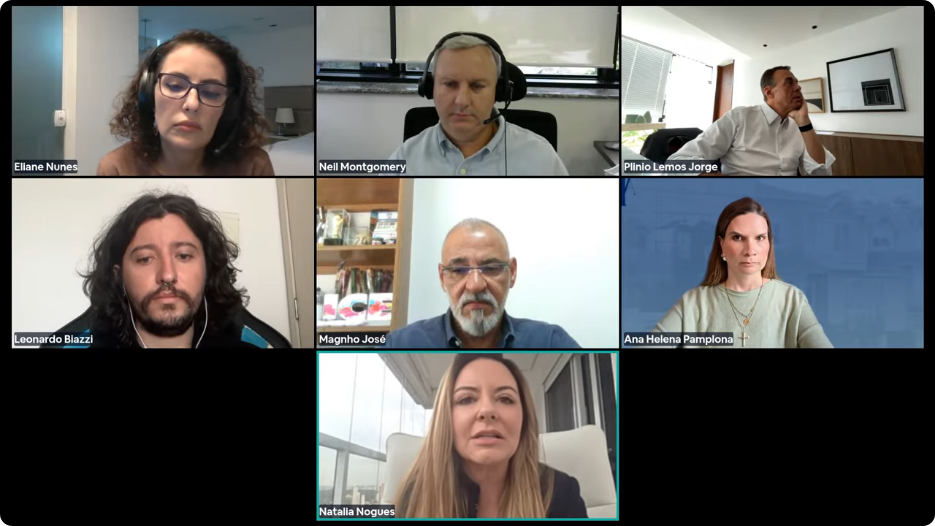
In the opening panel, BNLData editor Magnho José recounted the origins of the legislation. He recalled that physical gambling has been prohibited in Brazil for 85 years, with exceptions for lotteries and the bingo era. In 2018, the modality was included in Law 13.756, at the initiative of the Treasury, as a "fixed-odds bet," a lottery modality. According to him, the project only passed without resistance from the religious lobby because of its name. "If it had been called sports betting, it would never have been approved." For Magnho, Brazil "started building the house from the roof": it did not build a gambling culture and spent six years without regulation.
Tax lawyer Ana Helena Pamplona classified as "completely fake" the claim that authorized operators did not pay taxes. They collected IRPJ (Corporate Income Tax), CSLL (Social Contribution on Net Profit), PIS/Cofins (Social Integration Program/Contribution to Social Security Financing), and ISS (Service Tax) like any other company. The social allocations on the GGR (Gross Revenue Guarantee) were an additional charge: 12%, then 13% in 2026, with a forecast of 14% in 2027 and 15% in 2028. Lawyer Neil Montgomery attributed part of the confusion to the pre-regulation period, when the companies operated from abroad and were not, in fact, taxpayers in Brazil.
Journalist Eliane Nunes offered self-criticism: the industry "didn't know how to communicate." She failed to explain the difference between regulated and unregulated operators beyond the ".bet.br" domain. She also criticized the tone of campaigns like the one claiming "football is going to end."
Magnho attributed part of the responsibility to the regulator. According to him, the SPA did “a brilliant job” in building the regulations, but “failed in communication.” The agency only released the 2025 revenue figures and no official data throughout 2026, which, according to him, opened space for daily narratives against the sector. He cited as an example the recent ABRAS claim that Brazilians started consuming more rice and beans after the ban. “Lack of data generates narratives,” he summarized.
The president of ANJL, Plínio Lemos Jorge, said that the sector “didn’t see the shot coming” and that nobody expected such a drastic Provisional Measure with immediate effects. According to him, the market has returned to 2022, “where there was no prospect whatsoever.” Plínio said that companies are already studying judicial reorganization and that it is impossible to predict how many of the 83 operators will be able to recover. He informed that ANJL has sent extrajudicial notifications to Meta, Google, and TikTok regarding advertising on illegal websites. It also advised its members to file police reports and notify SPA whenever they identify websites cloned from their brands.
The calendar: Supreme Court and Congress
Magnho detailed the next steps. The Direct Action of Unconstitutionality (ADI) filed by ANJL is under the purview of Minister Luiz Fux, who avoided making a decision during the election period and convened a public hearing for November 3rd, with 26 representatives. According to Magnho, this time there will be more voices in favor of the sector than against it. In his personal opinion, it is an "electioneering provisional measure".
In Congress, the provisional measure will block the agenda and is expected to be extended for another 60 days, with a final deadline of March 4, 2027, already under the new legislature. For Magnho, a decision by Fux that at least keeps the houses open, even if modulated, would already be an important step forward. He reported seeing cloned websites of authorized brands advertising on Instagram and with an app available on Apple.
Neil Montgomery drew attention to a detail: the licenses were valid “up to” five years, not “for” five years. The provisional measure states that the government will not return the concession fee nor pay compensation, which he considers “completely wrong.” “Time works against industry,” he warned.
Legal vs. illegal
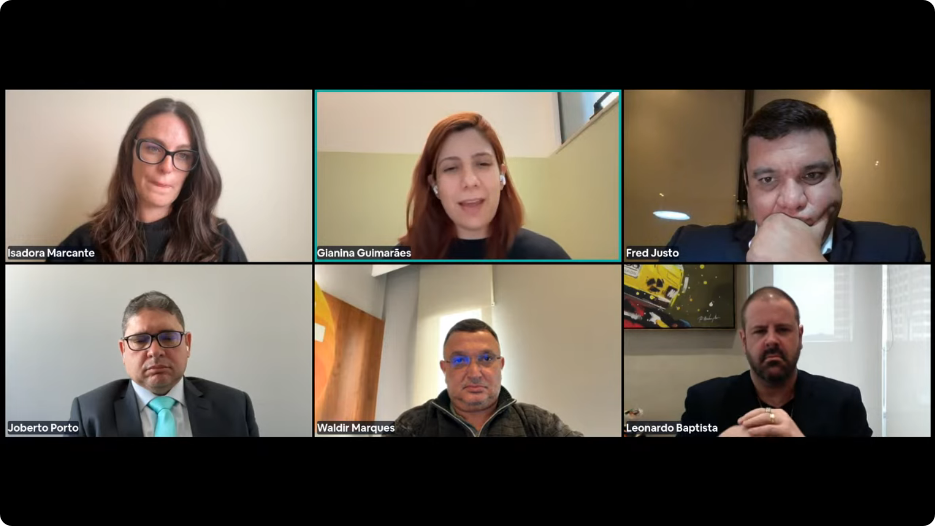
The second panel detailed the requirements imposed on the 85 authorization decrees granted. Joberto Porto reminded attendees that companies needed to demonstrate technical and financial capacity, tax compliance, and identify their ultimate beneficiaries. Waldir Marques, a former member of the SPA (Special Secretariat for the Promotion of Sport), explained the operation of SIGAP, the Treasury's system that received daily data on bettors, bets, and transactions via API. According to him, operators were even suspended for failing to submit the information on time.
Waldir also pointed out a breach of equality. The prohibited modality is just as much a lottery as Loteca and Lotogol, which remain permitted. He also cited recent international games in Brazil, in which foreign clubs displayed betting sponsors while Brazilian clubs were prohibited from doing so.
Fred Justo, who participated in drafting the anti-money laundering regulations, argued that Brazilian solutions, such as facial recognition in KYC (Know Your Customer) procedures, have begun to be copied by foreign regulators. "Houses don't launder money; people try to launder money in houses," he said, comparing the situation to banks and jewelry stores.
Leonardo Baptista, from the payment methods sector, explained the double verification of CPF (Brazilian taxpayer ID), carried out by the operator and the payment provider. Deposits and withdrawals could only be made to an account in the bettor's name. He estimated that there were more than 40 illegal websites in operation. Gianina Guimarães highlighted the requirement for free, 24-hour customer service in Portuguese, and reported that, after the ban, professionals in the sector began receiving advertisements for illegal websites via WhatsApp and email. According to her, this is evidence of data leaks.
"Today, bettors choose between the house that will harm them or the one that will harm the State," summarized Joberto Porto.
Consumer protection
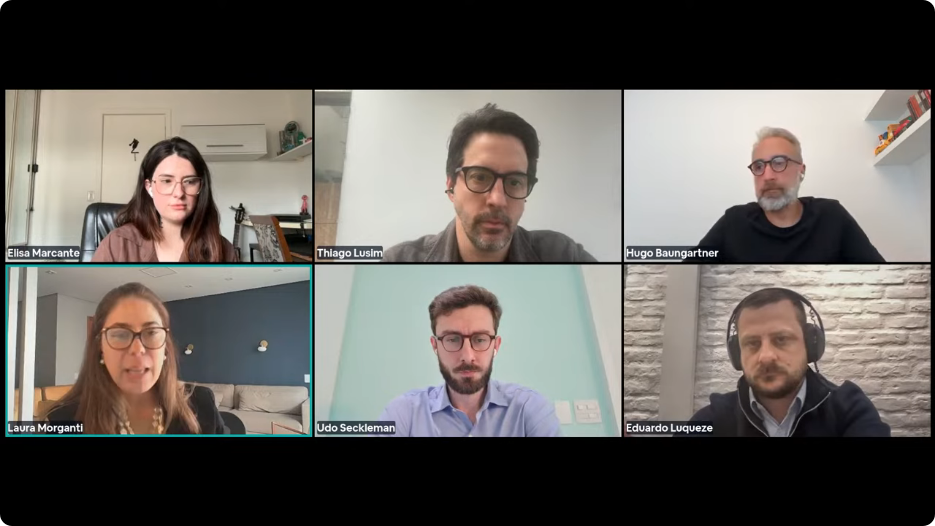
In the panel on risks, Laura Morganti was emphatic: minors could not bet in the regulated market. Any failures should be reported to the SPA (Sociedade Anônima do Futebol - Football Society). Hugo Baungartner reported cases of parents registering accounts in their own names and giving them to their children, which, according to him, is an educational problem that the industry cannot control alone. Thiago Iusim recalled that Ordinance 1.231 mandated behavioral monitoring systems and interventions in the face of risk signs. In the illegal market, he said, these systems work "in reverse," to push the player to lose more.
Udo Seckelmann and Hugo detailed the certification requirements for online games by international laboratories. The law requires a minimum return to player (RTP) of 85%, and the average practiced was above 90%. Eduardo Luqueze warned against the use of turnover data (total volume wagered) instead of GGR to inflate industry figures.
The panelists also cited a survey obtained through the Access to Information Law. According to the data, approximately R$ 170 million was paid in inspection fees between 2025 and July 2026, and none of that amount was actually used for inspections due to budget cuts.
Emanuel Macedo de Medeiros, from SIGA, stated that the Brazilian legislative experience was "one of the best" he had seen since 2005. He compared it to the American model, which he called a disaster for neglecting integrity. He also demanded that part of the revenue be invested in prevention and education. "Regulation may not be the silver bullet, but prohibition is certainly a self-inflicted wound," he said. Udo went further: "In what country in the world has prohibition managed to reduce these rates? None."
Advertising and influencers
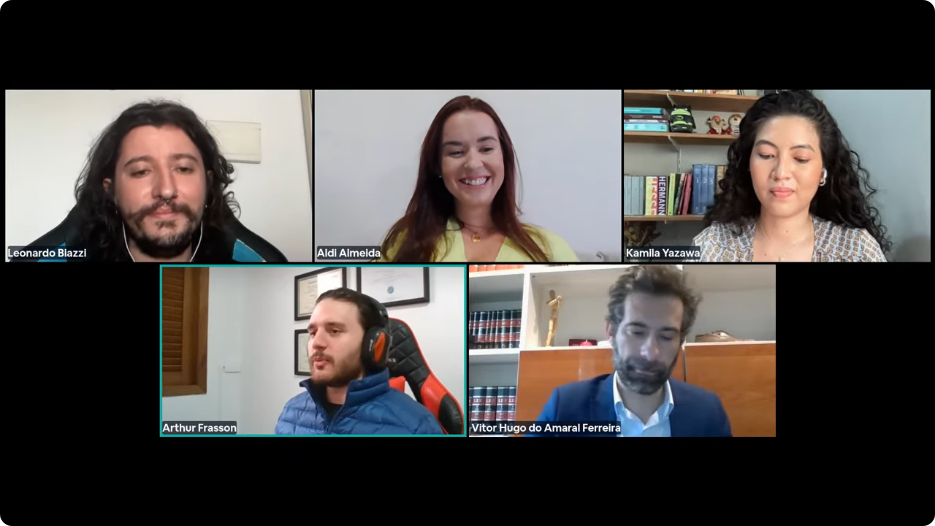
In the advertising panel, Kamilla Yazawa explained that articles 21 and 22 of Ordinance 1.231 established joint liability of the operator for the actions of its affiliates. Artur Fraçon, an affiliate marketing executive, said that influencers who currently promote illegal platforms "will go to the bottom of the list" when the market recovers. According to him, remuneration based on a percentage of revenue incentivized irresponsible content.
Aldi Almeida, from Abrajogo, recalled the sector's active participation in the creation of Annex X of CONAR and defended self-regulation as a complement to oversight. CONAR's legal director, Vitor Hugo do Amaral Ferreira, reported that the agency monitored approximately 140 pieces of content during the World Cup. During that period, more complaints were filed than in the rest of the year. He argued that adequate advertising is information and that eliminating it does not combat the illegal market: it only removes the possibility for authorized operators to differentiate themselves.
Who pays the bill?
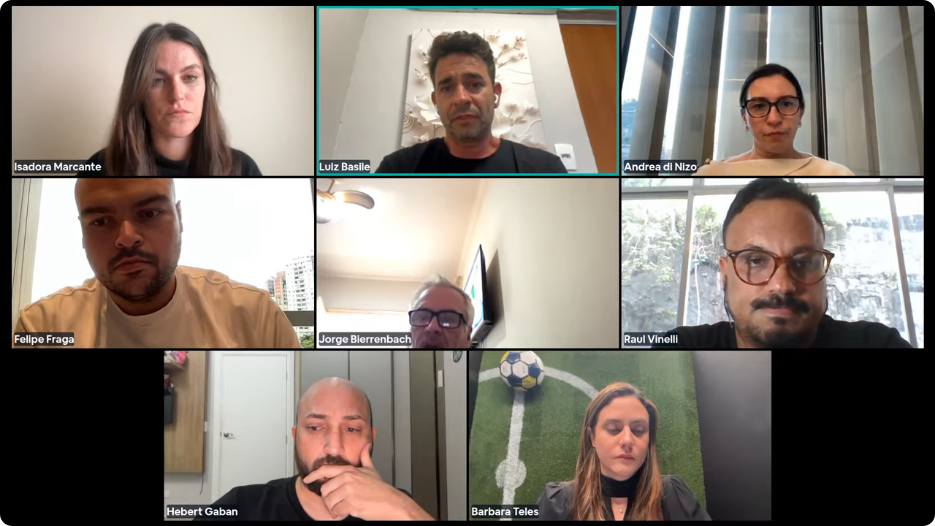
The fifth panel addressed the effects outside the industry. Jorge Bierrenbach, from the Brazilian Beach Tennis Confederation, stated that the COB (Brazilian Olympic Committee) could lose between R$ 130 million and R$ 150 million in funding. According to him, the Brazilian Club Committee (CBC) issued approximately 68 airline tickets this year for athletes in interclub competitions, partly funded by lottery and betting revenue. Luiz Basile, vice-president of the confederation, said that without sponsorship, there are no tournaments, and without tournaments, there are no athletes.
Raul Vinelli reported the case of a small club from the South that will not be able to honor its commitments until December and would not compete in Série D if the decision were made today. The panelists estimated that around 15 direct jobs across more than 180 brands, in addition to service providers, were affected. SBC itself announced that it will not hold SBC Rio, scheduled for March. Participants also challenged ABRAS's argument: according to them, the period coincided with government measures that put more money in people's pockets.
Andrea di Nizo argued that a potential ban on online casinos alone, while maintaining sports betting, would remove most of the operators' revenue and push players into the illegal market.
Regulate or prohibit
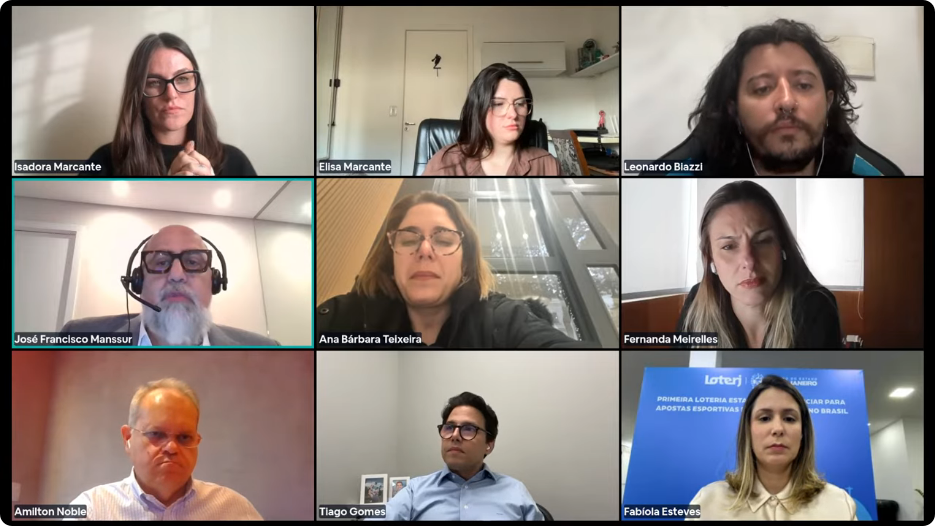
In the closing panel, José Francisco Manssur, who led the regulation process at the Ministry of Finance, assessed that the convening of the hearing eliminates the possibility of Fux fully adhering to the Provisional Measure. He reported that the minister included the Brazilian Olympic Committee (COB) and the Ministry of Sports in the list of speakers. He argued that the sector should coordinate to avoid repeating arguments, citing the joint action of five clubs: São Paulo, Vitória, Guarani, Ponte Preta, and Portuguesa. Manssur also made an accusation: SPA allegedly sent proposals for awareness campaigns on responsible gaming, which the Special Secretariat for Social Communication (Secom) refused to broadcast. "Our confrontation is with Secom," he stated. He predicted "many attacks" against the sector leading up to the hearing.
Ana Bárbara Teixeira, vice-president of Abrajogo, reported that of the 99 amendments presented to the Provisional Measure, 20 address the scope and 17 defend the continuity of the market. According to her, the safest path is a consensual solution between the government and the industry, mediated by the Supreme Federal Court (STF). Fernanda Meirelles agreed and warned that, even if the Provisional Measure fails, the damage is "irrecoverable" in the short term, since most contracts were terminated and not suspended.
Tiago Gomes assessed that simply reinstating the licenses could be "a Trojan horse" for operators who have already dismantled their structures. Regarding unfavorable opinion polls, he ironically stated: saying that 75% of the population is against gambling "is like saying that 75% is against tungsten." In his opinion, the government lacked "conviction" to defend its own regulation.
Amilton Noble used the jogo do bicho (a type of illegal lottery), banned for decades and accessible "on the corner of your street," as proof that prohibition doesn't work. He was self-critical: the market didn't understand the government's signals. He also said that the new industry that emerges will have fewer operators and will need to "multiply by 10" its efforts in responsible gambling and communication. According to data obtained via the Access to Information Law, the peak number of bettors in a single month was 12 million people.
The president of Loterj, Fabíola Esteves, argued that the sector should toughen its language: "It's a criminal market." According to her, the fight is not against the "illegal market," but against organized crime that takes advantage of the vacuum left by the Provisional Measure.
Helena Matos, from Jusbrasil, summarized the scope of the case: the legal uncertainty created by an abrupt change in an activity authorized by the State affects the credibility of all sectors that depend on regulation, not just the betting sector.

