
Macau's casinos generate US$30,9 billion and boost scientific investment.
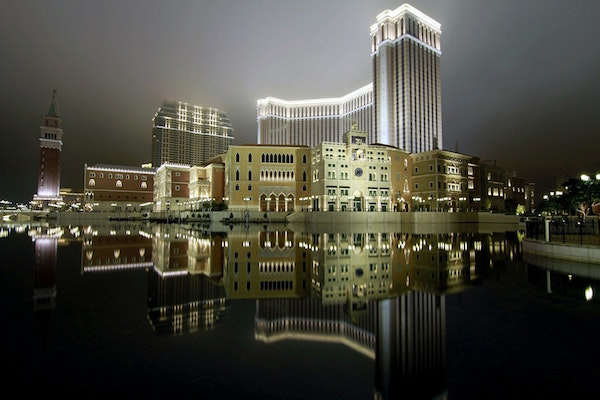
Macau, a special administrative region of China, has established itself as the world's largest gambling market and has begun redirecting part of its billion-dollar revenue to universities, research centers, and scientific infrastructure. By 2025, the territory's casinos were projected to generate gross revenue of approximately US$30,9 billion, more than double that of the Las Vegas Strip in the United States.
According to information obtained by Brasil247, the achievement takes on even greater significance when considering the size of the territory: approximately 33 square kilometers and a population of nearly 700 inhabitants. Taxes on casinos account for more than 80% of Macau's public revenue; by 2025, the sector's revenue exceeded US$11 billion.
Market opening and access to mainland China
The turnaround began in 2001, when the local government ended the historic casino monopoly and opened the market to international groups. Global companies began financing integrated resorts, luxury hotels, convention centers, and entertainment complexes in the territory.
Added to this was a structural advantage: proximity to the Chinese consumer market. China's rapid economic growth in the following decades generated a new middle class and a business elite with high purchasing power, transforming Macau into a preferred destination for tourism and leisure. Even after regulatory changes promoted by Beijing to reduce dependence on VIP gamblers, the territory maintained its global leadership in gaming revenue.
Investment in education and science
The University of Macau has become the prime example of this diversification strategy. The institution has received billions of dollars in investment over the past decades and has built a new campus on Hengqin Island, featuring advanced research laboratories, technological innovation centers, and international programs. Its areas of expertise include artificial intelligence, microelectronics, precision medicine, data science, oceanography, and engineering.
Other higher education institutions in the territory also received government support to expand research programs and strengthen international cooperation.
Dependence on casinos is gradually decreasing.
In recent years, Beijing has intensified its guidance for Macau to progressively reduce its dependence on the gaming sector. New casino concessions now require investments in cultural tourism, technology, entertainment, international exhibitions, scientific research, and higher education.
Integration with Hengqin Island, located in Guangdong province and directly connected to Macau, has become a central part of this strategy. The region is being developed as a platform for technological innovation, biotechnology, advanced medicine, and university cooperation. The project integrates the Guangdong-Hong Kong-Macau Greater Bay Area, one of China's most ambitious initiatives to create a global-scale innovation hub.
Macau was returned to Chinese sovereignty in 1999, after centuries as a Portuguese colony, and has since transformed from a regional tourist enclave into the world's largest casino capital. The next stage envisioned by Beijing is to transform this accumulated wealth into permanent assets: universities, research centers, and human capital development.