
Government bans prediction platforms in politics and sports, but decision does not affect betting.
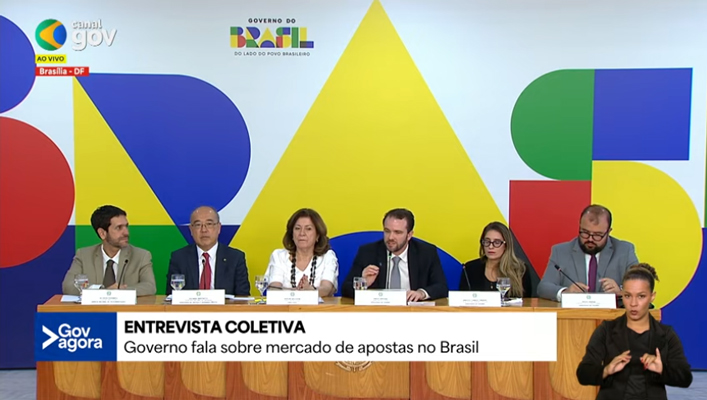
The Ministry of Finance has ordered the blocking of 28 platforms operating prediction markets in the country. The decision was announced this Thursday (April 23). The National Telecommunications Agency (Anatel) implemented the measure and notified more than 19,000 internet providers to interrupt access to these companies' domains.
The operation involved the participation of the National Consumer Secretariat (Senacon) and the Attorney General's Office of the National Treasury (PGFN). The platforms were deemed illegal for violating Law No. 14.790/2023, which establishes the rules for betting in the national territory.
The Finance Minister, Dario Durigan, stated that "prediction markets" have no legal basis in Brazil. These platforms do not fall under the legislation governing betting or the asset boundaries for derivatives established by the National Monetary Council (CMN) and the Securities and Exchange Commission (CVM). Durigan clarified that these platforms attempt to present themselves as financial products, but in reality, they function as disguised fixed-odds betting, without any economic or financial backing to justify their operation.

Durigan revealed that the government has already blocked 39 illegal gambling domains since 2025. 450 influencer profiles promoting irregular platforms were removed. The minister emphasized that there is no possibility of legalizing these companies through the payment of a license fee.
"Products that violate the law are not eligible for regulation through licensing," he stated.
The Minister of the Civil House, Miriam Belchior, characterized the action as preventive. The objective is to prevent the consolidation of an uncontrolled betting market in the country and to protect the income of Brazilian families. Belchior highlighted that more than 50 countries have already prohibited or restricted this type of service.
The minister stated that the government has been working since 2023 to establish clear limits in the sector. "The message is clear: operations in Brazil are only permitted if they comply with the rules," declared Belchior. She emphasized that the government is not against innovation, but that any economic activity must respect established legal frameworks, especially when it involves financial risks for the population.
She emphasized that the government only allows operations that follow strict rules of security and transparency. The minister cited international precedents from countries such as France, Germany, Colombia, Argentina, Italy, and states in the United States that have adopted similar restrictions on "prediction markets."

Legislation only authorizes two types of bets.
The Secretary of Economic Reforms, Regis Dudena, explained that Brazilian legislation exclusively authorizes betting on sporting events and online games . All other forms of gambling are illegal. Dudena highlighted that the National Monetary Council (CMN) issued a resolution limiting derivatives to assets with an economic-financial basis, such as indices, currencies, and interest rates.
Events such as "it's going to rain" or "celebrity death" cannot be the subject of derivatives. Dudena stressed that the attempt to classify these events as financial products represents a distortion of the capital market and a clear violation of current regulations. The secretary explained that legitimate derivatives have an economic function of hedging or speculation based on economic fundamentals, which does not occur in prediction markets.

The Secretary of Prizes and Betting at the Ministry of Finance, Daniele Cardoso, clarified that "prediction markets" replicate the typical dynamics of fixed-odds betting. These platforms involve risk, a future event, and a pre-defined prize. Cardoso detailed that, although these platforms attempt to differentiate themselves using financial market terminology, the operational structure is identical to that of traditional betting: there is an uncertain future event, odds that define the potential return, and a payout conditional on the outcome.
Cardoso reported that the Prizes and Betting Secretariat has an agreement with Anatel (Brazilian National Telecommunications Agency) to block illegal websites. The secretary revealed that there are half a million self-exclusion requests on legalized platforms. Of this total, 10% were motivated by financial problems. This data, according to Cardoso, demonstrates the importance of consumer protection mechanisms, which are absent on blocked prediction market platforms.
Cardoso emphasized that legal and regulated platforms can operate as long as they meet all the specific requirements established by current legislation. The centralized self-exclusion system allows bettors to voluntarily exclude themselves from regulated platforms as a protective measure against compulsive gambling. The secretary warned that prediction market platforms do not offer these protection mechanisms, exposing users to even greater risks of developing compulsive behavior.

The National Consumer Secretary, Ricardo Morishita, stated that the measure prevents the "manipulation of betting ." Outside of the two legal exceptions—regulated betting and derivatives with economic backing—the activity constitutes a criminal offense and an abusive commercial practice.
Morishita advised consumers to check if the platform has a .bet.br domain. Otherwise, it is an illegal and risky service. Morishita emphasized that "prediction markets" disguise bets as financial products, constituting abusive and illegal practices. The secretary explained that this "masking" is particularly dangerous because it can attract consumers who would not consider themselves gamblers, but who feel comfortable with the language of financial investments.
Operating outside the legal framework exposes consumers to financial risks and debt. The secretary warned that these platforms represent a patrimonial risk for users, who lack legal guarantees in case of problems. Morishita highlighted that, unlike regulated platforms, prediction markets do not have dispute resolution mechanisms, are not subject to oversight by consumer protection agencies, and can simply disappear with users' funds without any consequences.

Anatel implements blocking in cooperation with service providers.
Anatel advisor Octavio Pieranti detailed the technical blocking procedure. Following notification from the Ministry of Finance, the agency instructed internet service providers to block access to the 28 identified platforms.
Pieranti confirmed that the blocks were implemented. Anatel remains available to execute new orders. He highlighted the cooperation of the service providers in complying with the determination. The advisor explained that the procedure follows established protocols and that the agency has a permanent structure to execute additional blocks as new illegal platforms are identified.
The action is part of a coordinated effort between different federal government agencies to curb irregular operations in the betting sector. The Attorney General of the National Treasury, Luciana Brayner, highlighted that betting on election results was already prohibited by a resolution of the Superior Electoral Court (TSE). This measure only reinforces control over this type of activity.
Brayner explained that the administrative infractions will be reported to the criminal prosecution agencies, including the Federal Police and the Public Prosecutor's Office, for investigation of possible crimes or misdemeanors. The prosecutor reinforced the illegality of these offers in Brazilian territory. The measure also aims to protect the integrity of the electoral process.
She warned of the risks of manipulation and illicit practices associated with this type of betting. Brayner highlighted that betting on political events can create perverse incentives for manipulating democratic processes and poses a threat to the fairness of elections. The prosecutor emphasized that protecting electoral integrity is an absolute priority and justifies rigorous control measures.
The government clarified that the blocked platforms cannot be regulated because they structurally violate the law. The subject matter of the bets offered does not fall within the scenarios permitted by Brazilian legislation. There is no path to legalization through the payment of a grant or regulatory compliance. The companies operating "prediction markets" bet on various future events, such as politics, weather, celebrity deaths, and entertainment, without any control or authorization.
Legal betting in Brazil is restricted to real sporting events or online games . These modalities require authorization from the Prizes and Betting Secretariat, compliance with responsible gambling rules, and tax payment. Regular platforms must follow specific consumer protection and operational transparency standards.
The government has identified several risks associated with "prediction markets." These include financial exposure and consumer debt, a lack of responsible gambling mechanisms, and measures to prevent money laundering. Authorities also pointed to risks to sporting integrity, with the possibility of match-fixing. There are also electoral risks related to betting on political elections.
The delimitation of assets for derivatives established by the CMN (National Monetary Council) and the CVM (Securities and Exchange Commission of Brazil) prevents the financial classification of non-economic events. This decision underlies the impossibility of regulating "prediction markets" as financial products. The government clarified that only derivatives with economic and financial backing can be legally traded in the country, excluding bets on random events or those unrelated to the economy.
The financial market is not affected by the measure.
The government's action does not affect legitimate financial market operations. Derivatives with economic and financial backing, such as contracts based on the dollar, Ibovespa, inflation, and interest rates, remain regular. B3 and other authorized institutions can continue their activities normally, provided they comply with current legislation.
What has been prohibited are contracts based on events without economic substance, which do not qualify as legitimate financial instruments. Authorities emphasized that the measure does not represent any restriction on the traditional capital market, but merely establishes clear boundaries between legitimate financial products and disguised bets. The government reinforced that the distinction is technically and legally sound, based on the economic nature of the underlying assets.
The Prizes and Betting Secretariat works in partnership with the National Council for Advertising Self-Regulation (CONAR) and the Digital Council to remove profiles and content that promote illegal platforms.
The coordinated action aims to curb the advertising of unauthorized services. The government emphasized that legitimate companies can continue operating, provided they respect the limits established by Brazilian law and obtain the necessary permits.
The planned complementary actions include monitoring payment institutions that process transactions from these platforms. The government also plans to intensify public communication about the risks of "prediction markets." There will be increased cooperation with law enforcement agencies to investigate illicit practices.
Removing advertising and profiles on social media is part of the strategy to combat irregular platforms. The Ministry of Finance announced that it will release studies and indicators on the social and economic impacts of betting markets. These surveys will be conducted in cooperation with the Institute for Applied Economic Research (IPEA).
The data aims to support public policies and improve sector regulation by providing accurate information on consumer behavior and the economic effects of betting. Authorities guarantee the continuation of blocking and monitoring actions.
The government will continue monitoring financial flows and advertising related to illegal platforms. Consumer protection measures will be intensified, with referrals for criminal prosecution when there is evidence of crimes. The Prizes and Betting Secretariat of the Ministry of Finance is the official point of contact for press information.
The regulation of the betting sector in Brazil follows international consumer protection standards. The legislation establishes responsible gambling mechanisms, including self-exclusion systems and spending limits. Authorized platforms must meet specific transparency and security requirements. The government has emphasized that the Brazilian regulatory model was developed based on international best practices and aims to balance the permission of legitimate economic activities with robust protection of consumers and public order.