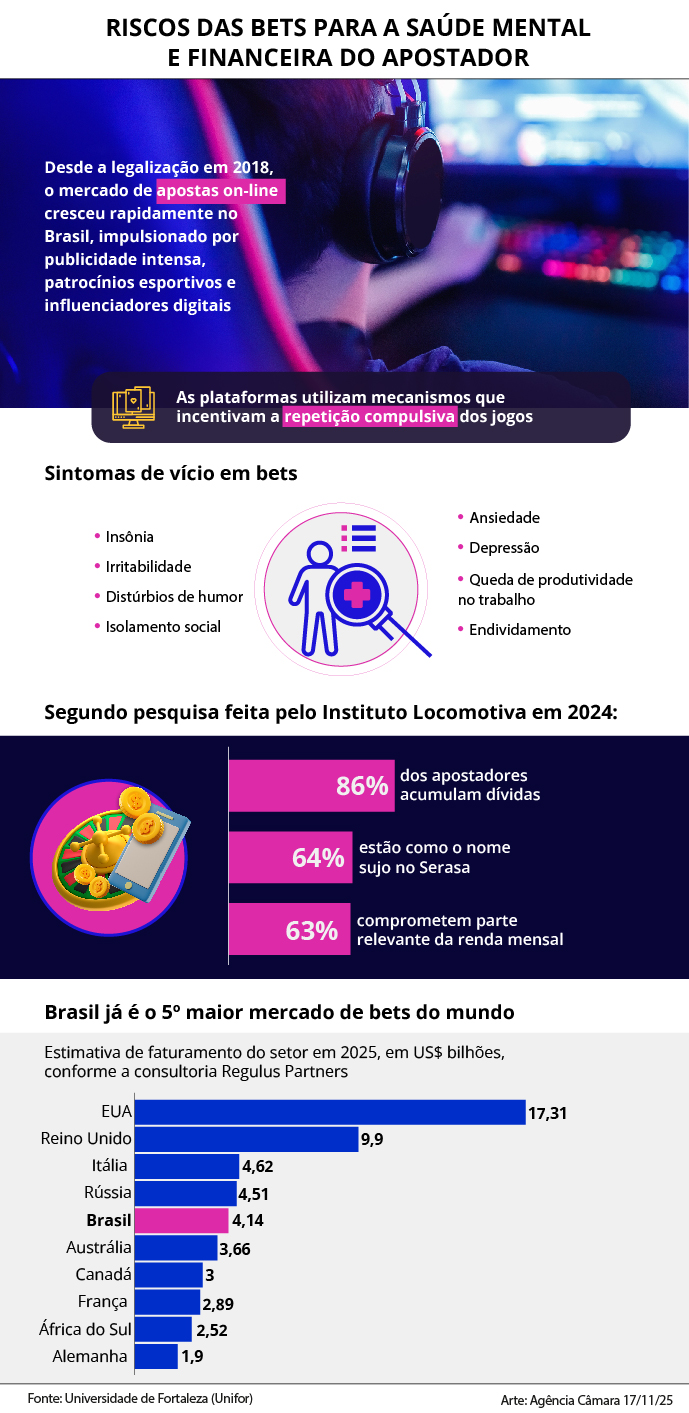
Finance Ministry presents measures against illegal betting to the Chamber of Deputies.

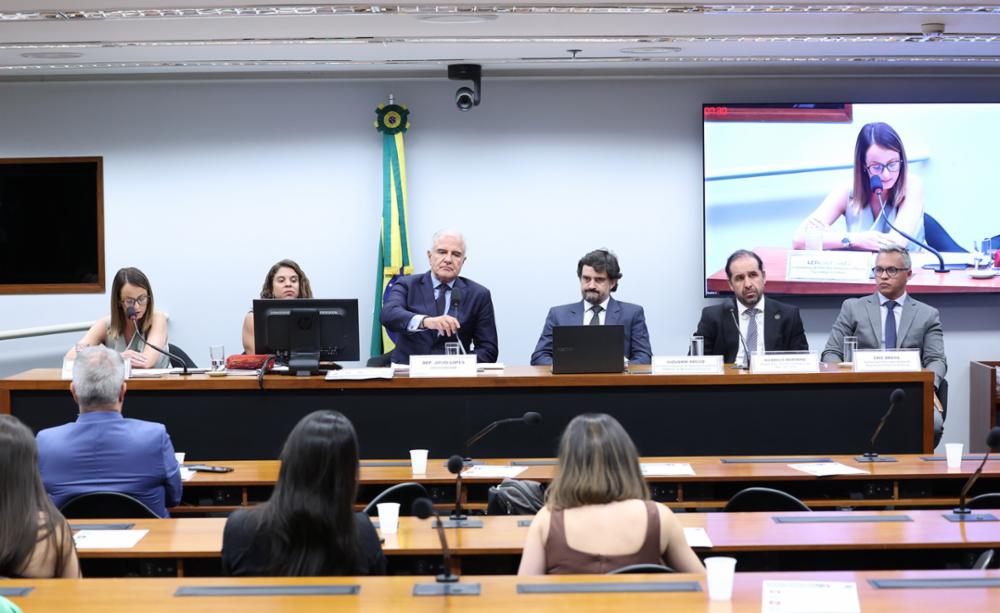
The Ministry of Finance's Prize and Betting Department said it has expanded its fight against illegal betting during a hearing of the Chamber of Deputies' External Committee on Acts of Piracy, held this Tuesday (11).
In Brazil, fixed-odds betting has been authorized since 2018 by Law 13.756/18 . In 2023, the so-called Betting Law created new instruments for state control.
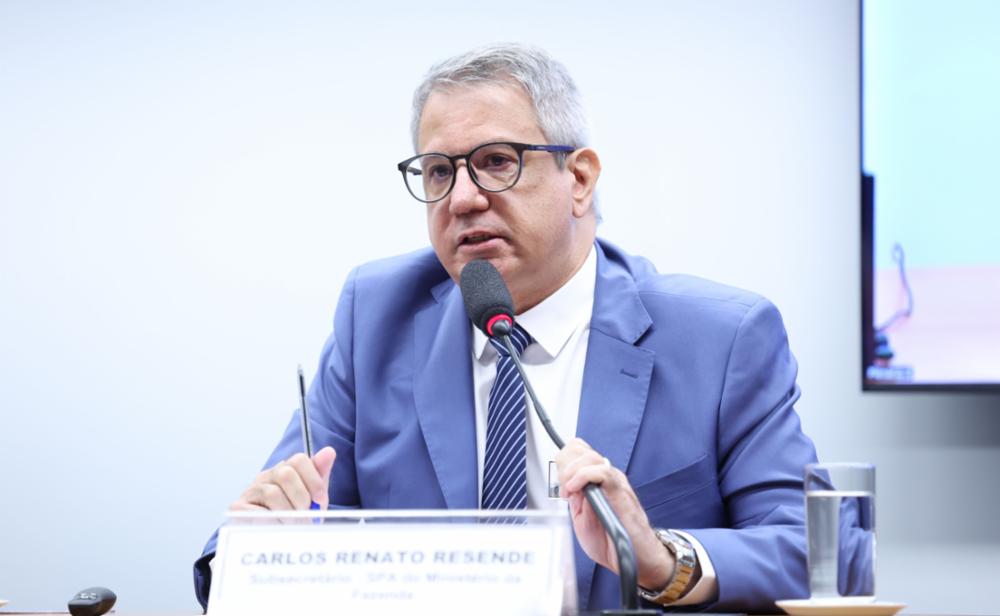
The Undersecretary for Monitoring and Enforcement, Carlos Renato Resende, said that the control began manually in January of last year. Since October, the blocking of illegal websites has become automated.
Carlos Renato Resende reported that more than 60 websites have already been blocked.
"Nowhere in the world has an illegal market been eradicated. In Brazil, we have other markets subject to piracy, and the difficulty is the same."
According to the undersecretary, the Anti-Faction and Organized Crime Law also created mechanisms to prevent illegal betting from being used for money laundering.
The Ministry of Finance is in contact with the National Financial System to create new regulations. The forecast given at the hearing was for publication by the beginning of August.
Carlos Renato Resende also announced new measures to freeze the assets of illegal companies and compensate victims of fraud.
“When this money is blocked, the affected consumer can come forward and prove that part of this money is theirs, in order to be reimbursed. At the end of the process, if the legal entity cannot prove the legal origin of the money, the funds will be forfeited to the Brazilian State and allocated to the National Public Security Fund, for the fight against crime in general.”
Recommendations from the TCU (Brazilian Federal Court of Accounts)
Some of these actions are based on recommendations from the Federal Court of Accounts (TCU), as outlined in Ruling 1296/26, approved in May.
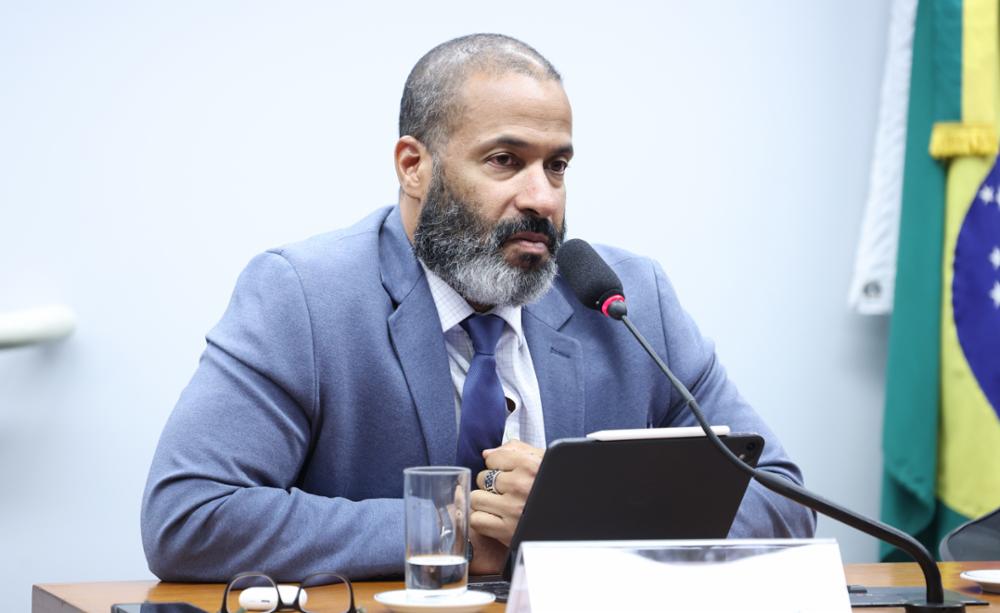
The Secretary of External Governance Control at the TCU (Brazilian Federal Court of Accounts), Wesley Vaz, advocated for joint actions between the Ministry of Finance, the Central Bank, the Federal Revenue Service, the National Telecommunications Agency (Anatel), and the Federal Police.
"There is a need for the State to better block domain names, interrupt financial flows, and sanction illegal operators."
illegal market
Research from the Locomotiva Institute, released this Tuesday, shows that illegal betting accounts for between 38% and 41% of the Brazilian market.
Eric Brasil, director of LCA Consultoria, said there was a reduction compared to the previous survey, which indicated participation of 41% to 51%.
"This represents, in a simple estimate, an 11% drop in the illegal market. Good news: the illegal market seems to be declining. What is the worrying aspect? When we compare it to other jurisdictions, other countries, we still have a very large illegal market."
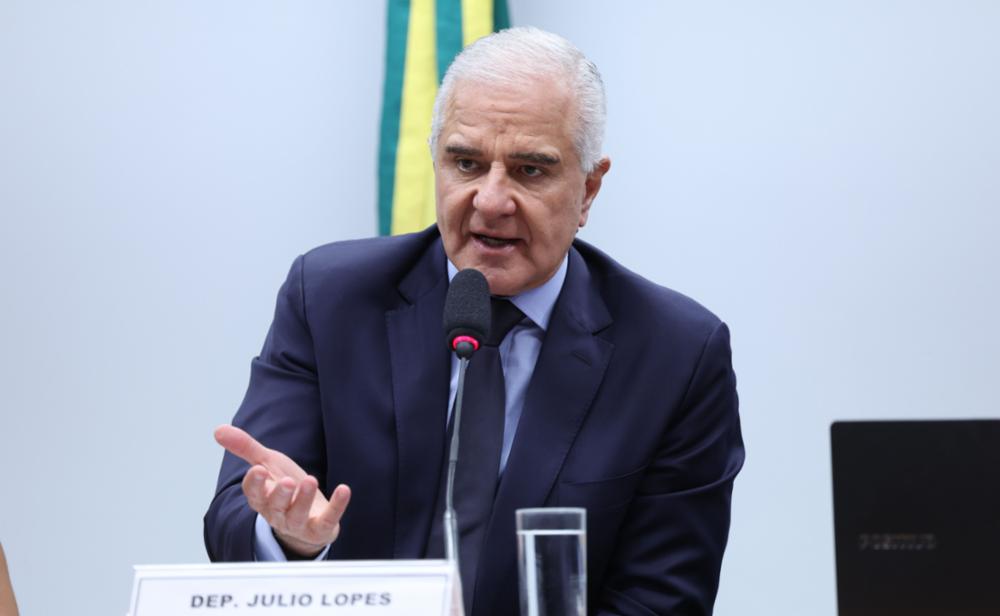
The coordinator of the commission, Deputy Julio Lopes (PP-RJ), also assessed the result.
"Although it's still a small decrease, it's something to celebrate. I think any progress in combating irregularities, smuggling, piracy, and tax evasion should be greatly celebrated."
The survey by the Locomotiva Institute was conducted in May with 2.291 people across the country and released this Tuesday.
Ireland has the lowest rate of illegal betting participation in the market, at 3%. Even with this reduction, Brazil still lags behind several European countries, as well as Australia, with 15%, and Mexico, with 20%.
Control of legalized betting
The Brazilian Institute for Responsible Gaming (IBJR) listed the control mechanisms present in legalized betting sites:
⇒ traceable payments;
⇒ bettor recognition through facial biometrics;
⇒ Prohibition of betting by minors under 18 years of age;
⇒ payment of taxes;
⇒ preventing money laundering through internal controls;
⇒ reporting suspicious transactions.
Risks for bettors
The director of the Laboratory for Human Rights and New Technologies (Labsul), Letícia Ferraz, said that uncontrolled gambling is associated with over-indebtedness, psychiatric problems, and even suicide attempts.
The laboratory will launch an educational booklet focused on protecting gamblers and consumers in general. ( Agência Câmara de Notícias )