Downturn: Why Las Vegas is facing a crisis
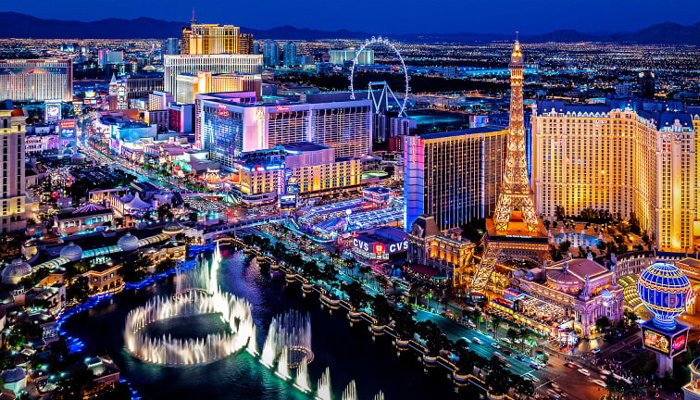
The artificial oasis, brimming with lights and contrasting sharply with the monotonous Nevada desert landscape, continues to shine with its characteristic opulence. The novelty in Las Vegas is that its unique urban silhouette, capable of bringing together in a single image a mix of gambling, music, alcohol, and sex—all wrapped in luxury and wealth—no longer exerts the same magnetism as before. The city is in crisis. In recent years, that corner of the United States where sin is permitted and encouraged has begun to face competition from online gambling and the disciplined habits of a generation of young people more concerned with health than with the excesses offered in the adult amusement park.
Gaming halls are no longer as crowded, and the competition to buy tickets for exclusive shows has decreased considerably. In the peak season, the Convention and Visitors Authority recorded 3,1 million visitors in June, an 11,3% drop compared to the same period last year. Hotel occupancy plummeted 14,6%. The phenomenon has multiple causes, but they all converge on the same conclusion: the model that established Las Vegas as a must-visit international destination sounds outdated. "The combination of casino, party, and drinking has lost its appeal," says Erik Cabral, a businessman in the sector who has seen demand for travel packages to the destination decrease in recent years.
For some time now, casinos have been frequented mostly by older people, given the possibility for retirees to afford sophisticated accommodations, combined with the dream of securing an extra inheritance for their children and grandchildren. However, operators are concerned about the low turnover of the clientele. Currently, 38% of Americans under 35 declare themselves teetotalers and therefore less likely to succumb to alcohol while risking their savings on a lucky break. "Young people are more aware of the risks and seek experiences with purpose and connection, instead of escaping through alcohol," says psychoanalyst Artur Costa, a specialist in the behavior of Generation Z.
The decline is visible on Las Vegas Boulevard, the famous Strip, where the imposing casinos line up. In the block of the iconic Tropicana Hotel, the setting for films like 007 — Diamonds Are Forever and The Godfather Part II, there is now an empty lot. The development was demolished at the end of last year after going bankrupt, without a second thought. Further along, on another huge block of the region's main landmark, there is only a parking lot. And so it will remain. The lot, acquired for $270 million by businessman Tilman Fertitta, the billionaire owner of the Houston Rockets, an NBA basketball team, was intended to house a 43-story hotel, but the project was canceled due to the evident risk of failure.
Another factor scaring tourists is the surprisingly high prices. Low demand should drive prices down, but the dynamics of local tourism are having the opposite effect. Since gambling became the city's main attraction in the 1940s, hotels have compensated for meager profit margins on lodging and food with the high profits from betting tables—the appeal is so great that there are even slot machines in the bathrooms. With business dwindling, the only option has been to readjust daily rates and meal prices. At the famous Flamingo, a cocktail costs no less than 220 reais, and a cheeseburger by the pool reaches a scandalous 500 reais.
The most promising measure to bring the city back to its heyday is the creation of new attractions, more connected to the modern world. The current success is the Sphere, a futuristic dome with 360-degree projections, state-of-the-art sound, and seats that vibrate in sync with the action on stage. The immersive version of The Wizard of Oz has already sold 120,000 tickets before its premiere, scheduled for the end of this month. The expectation is to reach 200,000 spectators, increasing the share of visitors who include the attraction in their itinerary from 7% to 10%. Diversification efforts also include the Formula 1 Grand Prix, which uses the Strip as its main straight, and the games of the Las Vegas Raiders, an American football team. For now, it's worth listening to Frank Sinatra's sharp definition of the city: "In Vegas, money really talks. And it says 'goodbye'." The challenge is to make it come back. ( With information from VEJA Magazine )