Brazil, with 1,2 million self-excluded gambling users in eight months, surpasses countries with decades of regulation.
Data released by the Secretariat of Prizes and Betting (SPA) of the Ministry of Finance shows that, as of September 2026, more than 1,2 million people voluntarily requested self-exclusion from fixed-odds betting platforms authorized to operate in Brazil. This number is part of the Centralized Self-Exclusion Platform, created by the SPA and made available in December 2025, and represents 3% of the 40 million active CPF (Brazilian taxpayer identification number) registrations in the Betting Management System (Sigap).
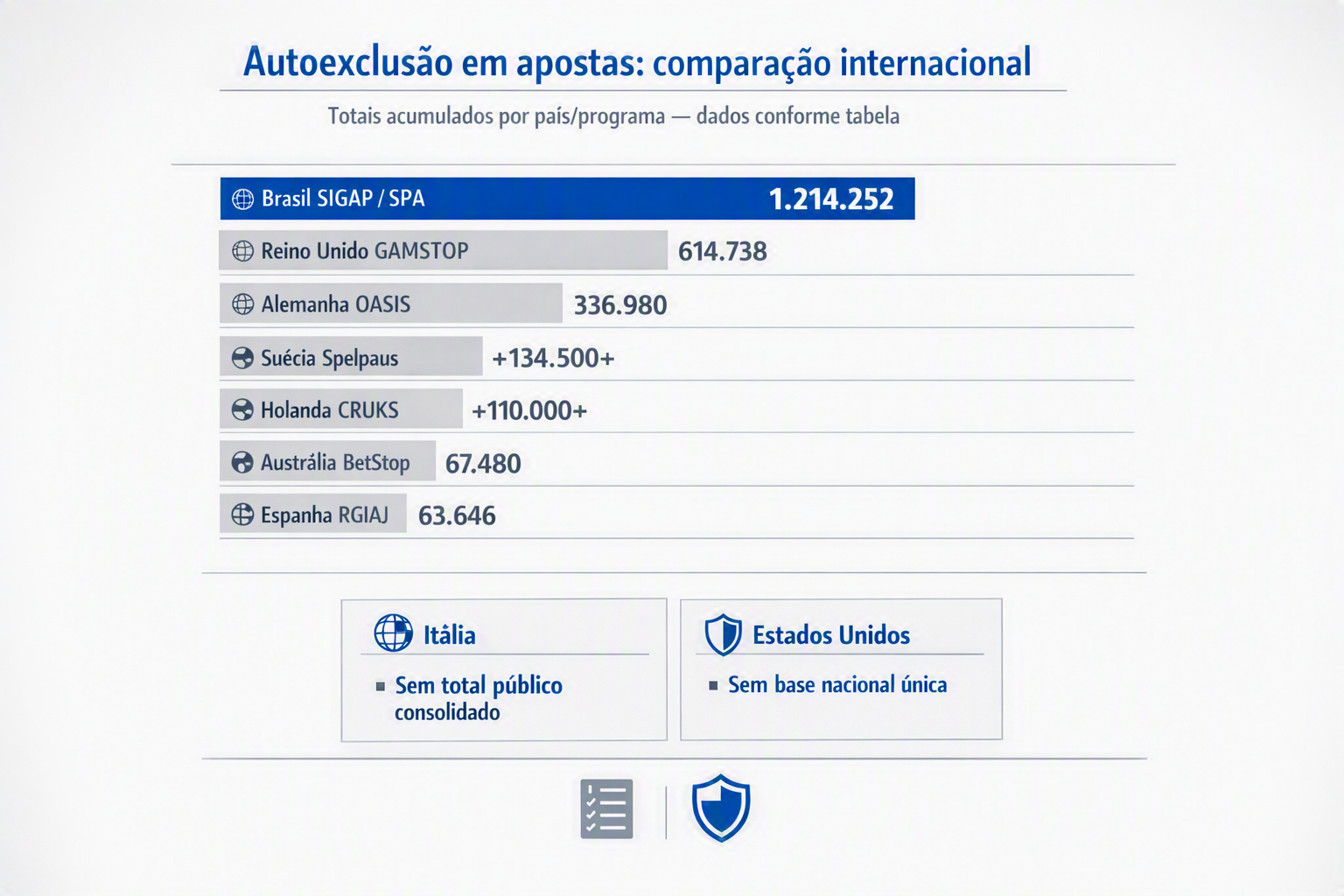
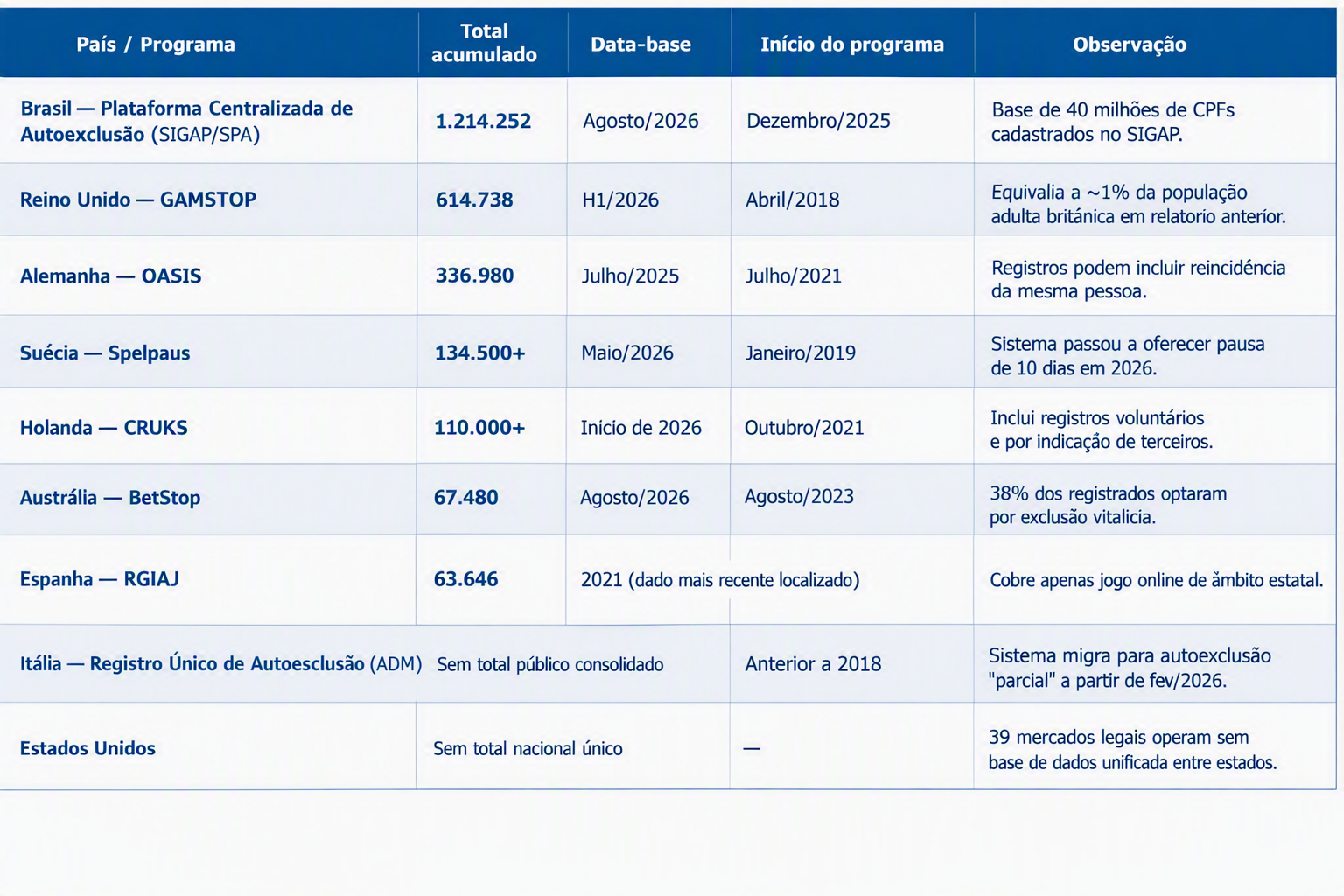
A survey by BNLData, using official data from regulators in seven countries, shows that this volume puts Brazil ahead, in absolute numbers, of virtually all major national self-exclusion programs currently in operation — most of which have been active for years, and some for almost a decade.
the comparative
High volume, young market
The most relevant data for regulatory analysis is not only the absolute volume reached by Brazil, but the time it took to achieve it. The Brazilian Centralized Self-Exclusion Platform has been in operation for about eight months. For comparison, GAMSTOP in the United Kingdom took eight years to reach 614.738 accumulated registrations; Spelpaus in Sweden took seven years to surpass 134; and OASIS in Germany took four years to exceed 336.
The most robust interpretation, therefore, is not that Brazil has a population proportionally more affected by gambling problems than these countries—the denominators used in each case are not directly comparable, as detailed in the methodological note below. The interpretation is one of speed of adoption: with a fixed-odds betting market regulated for just over a year and a half (Law 14.790/2023 came into effect in January 2025), Brazil has registered, in less than a year of a centralized system, an adoption rate that surpasses, in absolute volume, systems in countries with markets regulated for decades.
methodological note
The numbers presented are not directly comparable to each other for at least three reasons:
⇒ Distinct reference base: the Brazilian percentage (3%) is calculated based on active bettors registered in Sigap, while the percentages frequently published by the United Kingdom, Sweden, and the Netherlands are based on the total adult population of the country — a broader base and, therefore, a naturally lower percentage.
⇒ Counting recidivism: in the German system (OASIS), the same person can self-exclude more than once over time, which can inflate the total number of records compared to the number of unique individuals.
⇒ Scope of coverage: some registries (such as the Spanish RGIAJ) cover only state-regulated online gambling, while others (such as the Brazilian and Australian registries) cover all nationally licensed platforms.
As of the closing of this analysis, no consolidated and up-to-date public total was found for the Italian self-exclusion registry (managed by the ADM), nor a single national total for the United States, where self-exclusion is fragmented across state systems without mandatory interconnection—a weakness already pointed out by industry experts as a structural gap in gambler protection.

