
Why banning betting could cost Lula the election
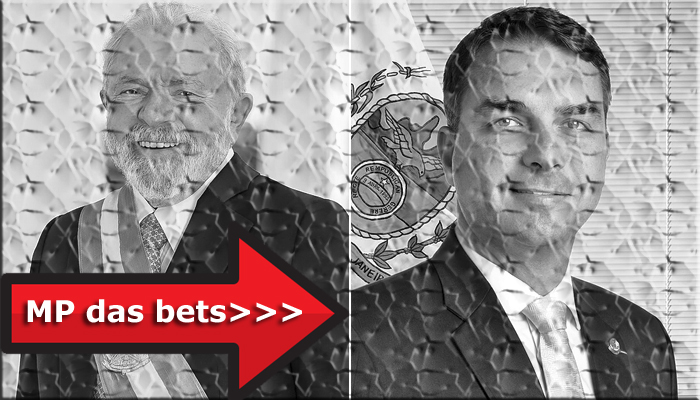
A potential Provisional Measure from President Luiz Inácio Lula da Silva prohibiting sports betting and online gambling has less to do with consumer protection than with political calculation—and it is precisely in this area that it could backfire on the government itself. The most recent polls show a tighter presidential race than at any point since 2022, with the betting sector supporting a contingent of voters, sports sponsorships, and tax revenue that is too large to be discarded without political cost.
The race is tighter than in 2022 — and getting worse for the Planalto Palace.
The Quaest poll released on September 7th showed Lula and Senator Flávio Bolsonaro (PL) technically tied in a potential second round, with 41% each. A week later, on September 14th, a new round by the same Quaest poll—the most recent available—registered Flávio numerically ahead for the first time: 42% to 40%, within the two-point margin of error, but a sign of inflection compared to the rest of the year. Datafolha, in turn, indicated on September 11th a lead for Lula over Flávio of 46% to 44%—also within the margin of error.
For comparison, the vote difference that decided the second round of the 2022 election between Lula and Jair Bolsonaro was 2.138.485 votes, equivalent to 1,80 percentage points of the valid votes. In other words, the current scenario of a technical tie, with a worsening trend for the government in recent weeks, already reproduces — or surpasses — the level of closeness that characterized the most contested election in the country's recent history.
In this context, SIGAP (Betting Management System), from the Prizes and Betting Secretariat of the Ministry of Finance, registered 30.895.934 unique CPF numbers (Brazilian taxpayer identification numbers) with active bets in the first half of 2026 — a potential voter base that, in itself, exceeds the vote difference in any of the last presidential elections. If only 10% of this universe — about 3 million people, not counting family members and dependents of jobs linked to the sector — change their vote because they feel directly harmed by a ban, the potential impact surpasses the margin that decided 2022.
Football as a transmission belt of wear and tear.
It's no accident that the betting sector has become, in less than two years, the biggest sponsor of Brazilian football. More recent surveys (September 2026) show that 14 of the 20 clubs in Série A have betting companies among their sponsors, with 13 holding the most prominent sponsorship space – the main shirt sponsorship.
⇒ Flamengo : R$ 268,5 million/year (Betano) — the largest contract ever recorded in Brazilian football.
⇒ Palmeiras : R$ 170 million/year (Sportingbet)
⇒ São Paulo : R$ 113 million/year (Superbet)
⇒ Corinthians : R$ 150 million/year (Sports of Luck)
⇒ Fluminense : R$ 86 million/year (Superbet)
In total, the sector allocated approximately R$ 1 billion to sponsorships of Série A clubs in 2026 — a decrease compared to the R$ 1,1 billion in 2025, largely due to contractual instabilities. Even so, this volume continues to support payrolls, youth academies, and training centers in historically indebted clubs. An abrupt ban would reopen, overnight, these clubs' dependence on advance TV revenue and expensive loans — the same cycle that betting revenue helped to interrupt.
Fans feel this kind of blow quickly, and clubs with political leaders linked to the president — such as Corinthians, Lula's team — are not immune to the damage to their image caused by a sudden financial crisis.
What's at stake in the fundraising?
The tax figures are also significant. Between January and July 2026, betting companies collected R$ 8,7 billion in federal taxes—a 76% increase over the same period in 2025—a rate that projects annual revenue well above the R$ 9,95 billion collected in 2025, even before adding municipal ISS (Service Tax), concessions, and inspection fees. A study of the sector (LCA Consultores/Cruz Consulting, financed by IBJR and ANJL—entities that represent the operators themselves, which requires a disclaimer of interest) estimated the total revenue linked to the regulated market, adding all these items, at around R$ 9 billion in 2025 alone, with the potential to generate R$ 28 billion in multiplier effect on the economy. There is no indication, in the proposed bans under discussion, of a substitute tax source to cover this gap.
The same study — of industrial origin and which should be read as such — counts 15,5 direct and indirect jobs in the sector, of which 10 are direct, with 47% classified as skilled (IT, cybersecurity, compliance, data analysis) and an average salary of R$ 7, more than double the national average. These are people who lose their jobs, not a statistical abstraction.
The argument for prohibition does not hold up against Brazil's own recent history.
Brazil operated with unregulated online betting for more than five years (2018–2024), with foreign operators, without taxes and without any consumer control. A study by TMC with the Instituto Esfera (February 2026) and another by LCA Consultores/Instituto Locomotiva (August 2026) show that the illegal market still accounts for 38% to 44% of the total wagered in the country — a decrease compared to the 41% to 51% range recorded in 2025, but far from zero even with the regulated market fully operational. Prohibiting legal activity does not eliminate this demand: historically, it migrates to sites without “bet.br” in the domain, without facial biometrics requirements, and with deposits via cryptocurrencies or credit cards — precisely the channels that currently circumvent oversight.
This is also a consumer protection issue. Current regulations (Law 14.790/2023) require licensed operators to use Pix, biometrics, synchronized self-exclusion tools across platforms, betting limits, and account blocking for beneficiaries of Bolsa Família and BPC programs. None of these mechanisms reach a clandestine platform. A total ban tends to affect both the goalkeeper and the criminal: it removes the average bettor from regulatory protections and leaves those already operating illegally untouched.
The most frequently cited international parallel is that of Norway, which maintains a state monopoly in the sector: according to estimates by the European Gaming and Betting Association (EGBA) — an entity that represents private operators and therefore has a direct interest in dismantling state monopolies — 66% of the country's online betting activity currently takes place on international websites outside the reach of Norwegian tax authorities. This figure should be interpreted with this caveat regarding its origin, but it illustrates a real pattern: excessive restriction of legal supply tends to push demand beyond regulatory reach, not eliminate it.
Match-fixing: the argument used against those who advocate for a ban.
One of the most cited fears by proponents of the ban is the manipulation of sporting results. Recent data, however, shows the opposite of what intuition suggests. The "Whistle Mafia" (2005) and Operation Maximum Penalty (launched in February 2023 by the Public Prosecutor's Office of Goiás, with successive phases until 2025) revealed schemes to bribe players to force cards and penalties in Series A and B matches — cases that resulted in convictions of up to 22 years in prison and more than 30 formal charges.
The central point is that these schemes were identified and dismantled precisely because of the traceability structure created by regulation, not despite it. The General Sports Law (Law 14.597/2023) classified manipulation as a crime, and Law 14.790/2023 obliges licensed operators to monitor atypical betting patterns, report suspicions to the authorities, prohibit bets by athletes and managers (identifiable by CPF and biometrics), and maintain a complete record of each transaction available to the SPA, the Federal Police, and the Public Prosecutor's Office. Eliminating the regulated market eliminates exactly this layer of tracking—without eliminating betting itself, which remains available on any foreign website without any obligation to report suspicious patterns to anyone.
Olympic and Paralympic sport is also caught in the crossfire.
The legislation that created the 12% to 15% contribution on GGR (gross revenue from betting houses) allocates a mandatory portion of these resources to public sports policies: in the first half of 2026, R$ 870,15 million of GGR revenue was transferred to programs linked to the Ministry of Sports — a resource that, in the public sports funding chain, also reaches Olympic and Paralympic confederations. A ban in the middle of the cycle eliminates this specific source of revenue without an announced substitute, at a time of preparation for the Los Angeles 2028 Olympic cycle.
The electoral calculation
“One fact that President Lula is not considering is that there are currently more than 30 million active unique bettors in Brazil. If he displeases just 10% of these bettors, the president will lose the elections,” assessed an expert in electoral research interviewed by BNLData.
A source connected to the government itself, in a private conversation, summed up the dilemma directly: "The ban will be a tragedy for various sectors of society, for sports, for tourism, and especially for President Lula's campaign."
Four presidential candidates are already publicly advocating for a ban on betting. It's an issue that resonates in speeches, but—judging by the fiscal, sporting, and electoral figures gathered here—it carries a political and economic cost that none of them have publicly quantified so far.